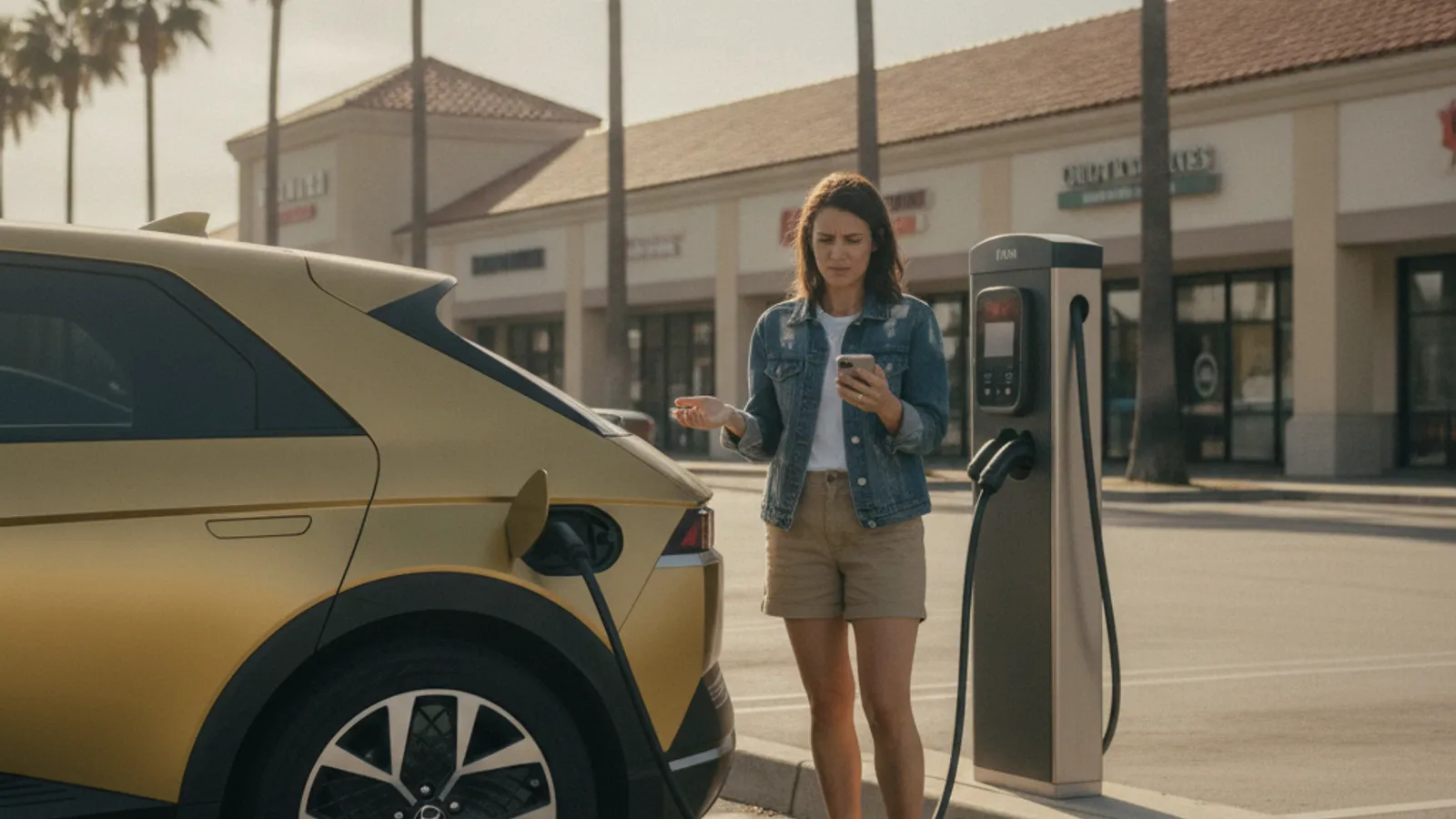
You plug the car in after work, and the garage goes quiet before dawn. The breaker has dumped the circuit again. Your EV charger keeps tripping the breaker. The pack is too low for the morning drive. In older Inland Empire housing, that’s often a shared circuit, not a random glitch.
Older San Bernardino Valley panels weren’t sized for Level 2
San Bernardino County still carries a large pre-1980 housing stock. ACS 2019-2023 puts that share at 43.8% of units. Riverside County is 30.2% on the same vintage. Those homes went in before a long EV draw was a normal garage load.
The gap city to city is wide. San Bernardino sits at 60.9% pre-1980. Ontario is 50.7%. Montclair is 68.5%. Norco is 68.8%. Eastvale is 2.2%. Temecula is 6.5%. A new tract isn’t the same electrical story as a 1960s valley garage.
Charge Pro IE doesn’t wire any of this. We’re a referral line. We match stranded EV drivers with independent local operators. We don’t hold a contractor license. We don’t pull permits. We don’t own trucks. A breaker that won’t hold is a licensed electrician’s job.
Level 2 charging doesn’t cycle like a dryer
A dryer kicks on and off. A shop compressor rests between uses. A Level 2 EVSE can sit at a heavy draw for hours. Add a freezer or welder on the same breaker. The combined load dumps the circuit. The charger alone might’ve held.
If the trip only hits when the garage fridge is running, that’s a shared circuit. If it dumps after 10 to 30 minutes, the run is likely too small. Stop treating it as a flaky switch. See older Inland Empire panels and EV chargers for what fails first on vintage stock.
Don’t keep resetting the same breaker. The trip is protection.
Two ground-fault systems can fight on one run
Most Level 2 EVSE units already watch for a ground fault. Some garages also have a GFCI breaker or receptacle on that same run. Two ground-fault systems on one circuit can trip each other.
EVSEs send a small test current to ground to confirm the earth path. An outside GFCI can read that tiny current as a fault. Nothing is leaking. The session still dies. Electricians often hardwire the station so that stack goes away. That’s their design call, not ours.
A trip at the instant you plug in, every time, often points here. Moisture and a failed EVSE can look the same in that first second. You need the rest of the pattern.
Irrigation, storms, and an uncovered outlet
Irrigation overspray still soaks an outdoor NEMA 14-50. A hose bib by the garage wall does the same. After a storm, water in the receptacle can trip protection. That’s a real fault, not a nuisance.
If the outlet is outside or uncovered, look before you blame the panel. Standing water, corrosion, or a damp connector means stop. Let it dry. Don’t keep plugging in. If it trips again once dry, call a licensed electrician.
Crestline’s pre-1980 share is 77.7%. Big Bear Lake is 59.6%. An old outdoor receptacle there has seen decades of weather. Valley heat ages covers and gaskets too.
The cable or wall unit can be the whole story
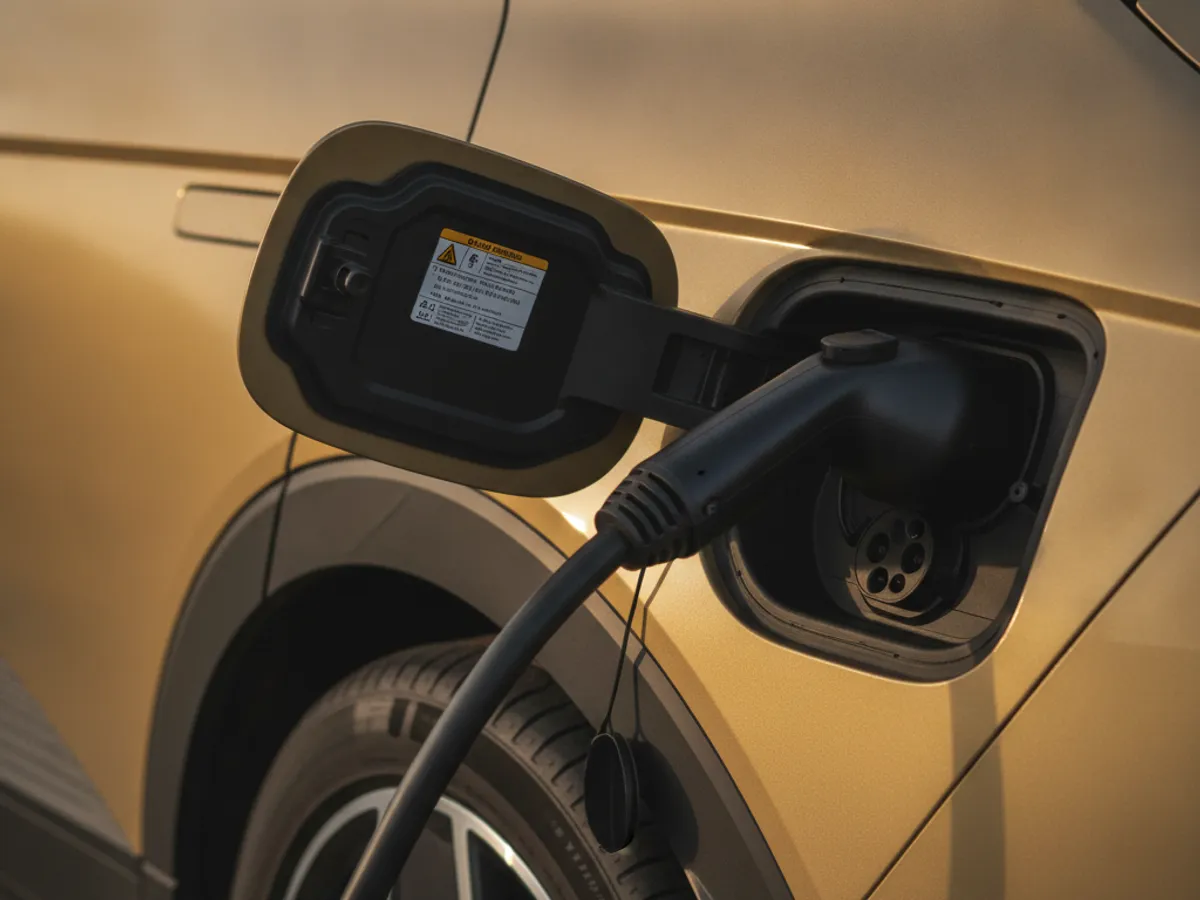
The house wiring can be fine. The portable cable that came with the car can still have an internal fault. So can a wall EVSE. If a different charger on the same outlet holds, the first unit is the suspect. If every charger dumps the same breaker, look at the circuit.
Don’t open the EVSE. Wiring stays with a licensed electrician.
Read the trip timing before you guess
Immediate trip at plug-in, every session: think ground fault, moisture, or a failed EVSE. Dry the connector. Try a different charger before you assume the panel.
Trip after 10 to 30 minutes: a continuous load on a small or shared circuit. That’s electrician work.
Trip only when another tool or appliance is on: shared circuit.
Trip only after rain or sprinklers: moisture in the outlet or plug. Dry it. Call an electrician if it repeats.
Trip with one cable and not another: charging equipment.
None of those timings is a full diagnosis. They’re a clean way to brief the electrician.
What you can check, and where to stop
Reset once. Write down when it tripped and what else was running. Look at the outlet face for water or rust. Unplug other garage loads if you know they share that breaker.
Don’t keep resetting. Don’t pull the panel cover. Don’t swap in a larger breaker to make it hold. Upsizing the breaker doesn’t add copper. It only removes the protection.
If the car is already too low, stop treating this as a charging night. A home charger that’s down versus a mobile charge is the fork. An empty pack from a dead circuit needs range.
Your utility didn’t trip that garage breaker
Southern California Edison serves many valley cities, including Fontana, Ontario, and Upland. Riverside Public Utilities serves the city of Riverside. Colton owns the electric system inside city limits. Bear Valley Electric Service covers Big Bear Lake and Big Bear City.
Rancho Cucamonga is split. SCE covers most of the city. Rancho Cucamonga Municipal Utility serves a southeast pocket. That pocket includes The Enclave, Day Creek Square, The Resort, and the Victoria Gardens area. Moreno Valley is split between SCE and Moreno Valley Utility.
Those names matter for rates and rebate pages. They don’t reset a shared garage circuit. SCE publishes TOU-D-PRIME and Charge Ready Home. Riverside Public Utilities publishes an Electric Vehicle Rate and Electrify Riverside. Rules and funding change. Confirm current details on the utility’s own site before you apply.
A new dedicated run or a hardwired EVSE still belongs to a licensed electrician. Permits follow the city. Charge Pro IE isn’t on that permit.
Miles while the house work waits
Electrical work runs on the electrician’s calendar. We don’t do that work. If you need range while the house waits, operators we connect you with can help. They bring a 240V Level 2 source to the driveway. Native NACS plug, plus CCS or J1772 adapters for non-Tesla EVs. Typical charging time adds about 10 to 20 miles of range. That takes 15 to 30 minutes of charging. That’s charging time, never an arrival window.
The operator quotes you before starting. They bill you directly. Charge Pro IE doesn’t set the price. We don’t own the truck. We don’t employ the technician.
Mobile EV charging is that visit. It doesn’t repair your circuit. If you’re already on empty miles, read what to do before you strand. See home 240-volt charging vs a roadside Level 2 hookup. Those two jobs aren’t the same.
Frequently asked questions
Is it safe to keep resetting a breaker that trips on the EV charger?
No. Stop after one or two trips. The breaker is opening for a reason: overload, moisture, or a ground fault. Repeated resets hide a condition that can get worse. Take the timing notes to a licensed electrician.
Can a faulty charging cable trip the home breaker?
Yes. An internal fault in the cable or EVSE can dump a healthy circuit. That can happen every time it tries to deliver power. A different charger on the same outlet is a useful check. If only one unit trips, treat the equipment as the likely cause.
Does Charge Pro IE install or repair a home EV charger?
No. We’re a referral line for mobile rescue. We don’t wire panels, install EVSE, or pull permits. For a breaker that won’t hold, you need a licensed electrician. If the car is empty, we can connect you with a local operator.
If the pack is sitting empty while you wait on the house, call (909) 250-2881. That’s the number to reach Charge Pro IE for a mobile Level 2 connection. It isn’t a promise of when someone arrives.