The Hyundai Ioniq 5 battery size is 58.0 kWh gross on Standard Range. Long Range uses a 77.4 kWh gross pack. Usable energy is about 54.0 kWh and 74.0 kWh. EPA range is 220 miles on Standard Range. Long Range RWD is rated at 303 miles. Long Range AWD is rated at 260 miles. Those numbers are a lab loop. They’re not the miles you keep after Cajon or a long I-10 climb.
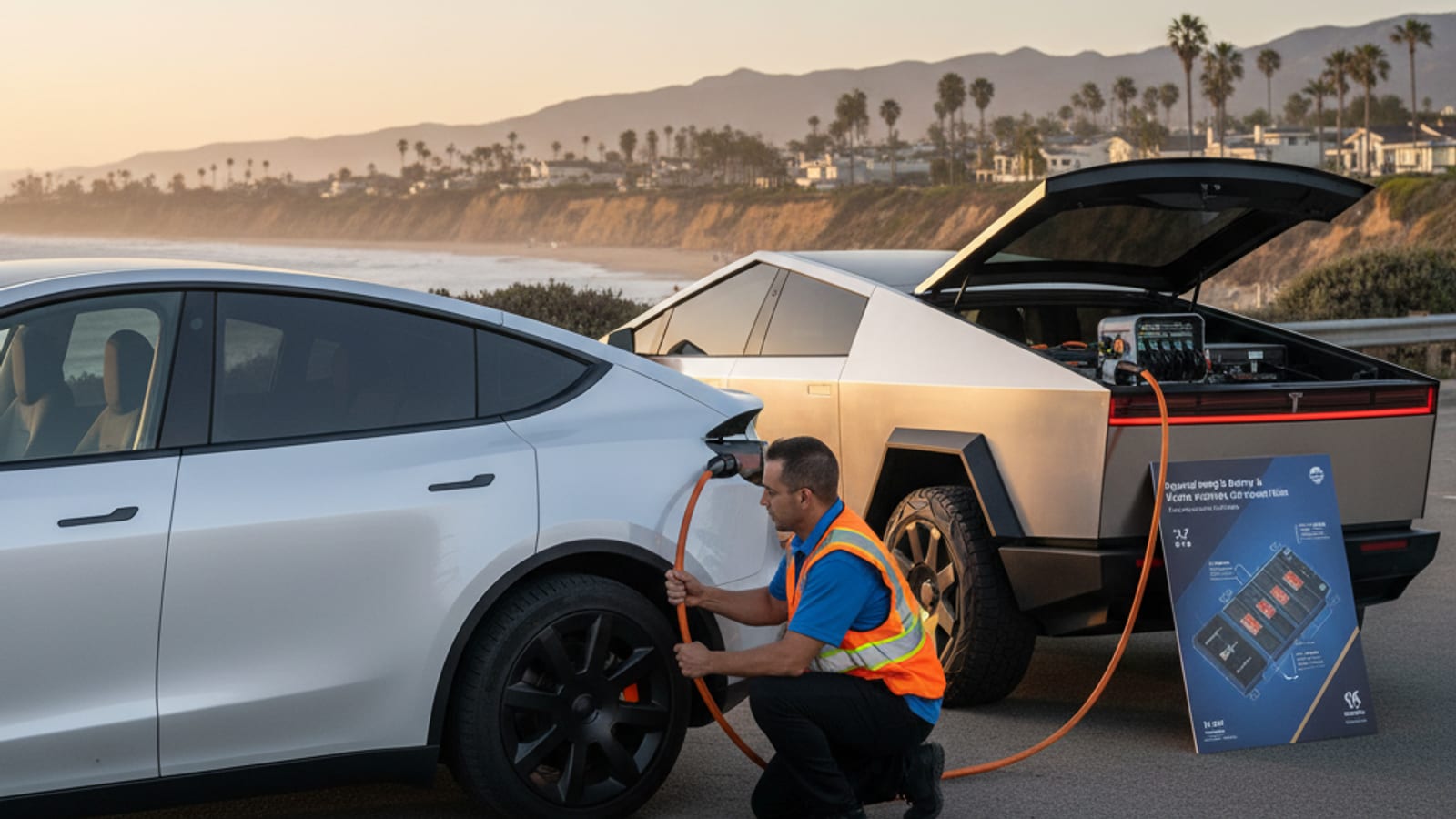
The sticker still earns its place. It tells you which pack you bought. It doesn’t tell you what a Fontana-to-Victorville run will cost. Inland Empire driving stacks heat, grade, and suburban miles. A 77.4 kWh pack can still feel tight on that mix. Read the spec first, then plan the climb.
The spec is a tank size, not a route plan
Kilowatt-hours are the tank, and range is what’s left after hills. Speed, HVAC, and payload spend that tank too. Hyundai sells two Ioniq 5 packs on the years most cars still use. Standard Range is the smaller pack. Long Range is the larger pack, in RWD or AWD. Both sit on the same 800-volt architecture. That architecture is why DC fast charging can peak near 239 kW. It doesn’t add extra miles on I-15. It only refills faster when you’re on a compatible stall.
Your energy screen is the number that matters today. The window sticker is only a starting point. If those two disagree, trust the car. Heat, wind, and a loaded cargo area show up there.
Two packs, and which number to read
Hyundai sells the Ioniq 5 around two traction packs. Owners mix them up because ads quote three figures at once. Gross size, EPA miles, and usable energy aren’t the same thing. Gross is the cell stack’s full rating. Usable is what the car will actually spend. EPA miles come from a lab cycle on a dyno. You live with usable kilowatt-hours on real roads.
Standard Range
Standard Range is 58.0 kWh gross, with about 54.0 kWh usable. It’s usually a single rear motor with a 220-mile EPA rating. That can cover a valley commute in Ontario or Chino when you start full. Rancho Cucamonga looks the same on a full pack. It leaves less reserve for a Cajon run toward Hesperia. It also leaves less reserve in 91 traffic in Corona with the A/C on. Fast DC charging still works on this pack. The 800-volt system isn’t limited to Long Range. You just start with a smaller tank.
If you mostly stay in Ontario, Chino, Montclair, or Upland, this size can be enough. Confirm your trim on the door sticker or the in-car battery menu. Don’t guess from the badge.
Long Range, RWD and AWD
Long Range is 77.4 kWh gross on 2022 to 2024 models. Usable energy is about 74.0 kWh. Rear-drive EPA range is 303 miles. All-wheel drive is 260 miles on the same pack. Extra motor means more drag and fewer rated miles. AWD is the trim that feels quicker on a freeway on-ramp. It’s also the trim that spends the pack faster on a grade.
This size is what most trip planning assumes. It still isn’t a free pass to Big Bear and back. You still have to watch the gauge. It isn’t extra cushion for Adelanto miles after a Fontana warehouse shift either. You have more buffer than Standard Range. You don’t have infinite buffer.
Hyundai Ioniq 5 battery specifications
| Feature | Standard Range RWD | Long Range RWD | Long Range AWD |
|---|---|---|---|
| Gross pack size | 58.0 kWh | 77.4 kWh | 77.4 kWh |
| Usable energy, approx. | 54.0 kWh | 74.0 kWh | 74.0 kWh |
| Drive | RWD | RWD | AWD |
| EPA range | 220 miles | 303 miles | 260 miles |
| Level 2 AC max | 10.9 kW | 10.9 kW | 10.9 kW |
| DC fast charge peak | up to 239 kW | up to 239 kW | up to 239 kW |
These figures follow 2022 to 2024 ratings Hyundai published for those trims. Your year can differ. Read the in-car energy display and the original window sticker. Usable energy is an approximation because Hyundai holds a buffer at both ends.
Gross versus usable, without the marketing blur
Gross capacity is the full chemical rating of the pack. Usable capacity is the slice the car lets you drive on. Hyundai keeps a buffer at the top and the bottom. That buffer protects the cells. It’s why a 77.4 kWh car doesn’t give you 77.4 kWh of driving. The dash percent is percent of usable, not percent of gross. When you hit 0% on the display, there may still be a tiny reserve. Don’t plan on it. Treat displayed 0% as stopped.
A 100% charge on a Long Range car is 100% of about 74.0 kWh. It isn’t 100% of 77.4. Same idea on Standard Range with about 54.0 kWh usable. If a listing only quotes 77.4 or 58, ask which number they mean.
Why Inland Empire miles don’t match the EPA loop
The EPA cycle isn’t I-15 north of San Bernardino. It isn’t I-10 through Colton and Redlands. It isn’t SR-60 across Jurupa Valley. It isn’t I-215 through Moreno Valley and Perris. It isn’t the Ortega near Wildomar. Those roads add grade, speed, and heat the lab doesn’t stack the same way.
Speed is the quiet drain. Holding a high cruise on a grade costs more than a steady 65 on the flat. Smooth throttle helps. So does leaving a gap so you’re not surging. Regenerative braking returns some energy on the way down. It doesn’t refund the whole climb. You spend more going up Cajon than you recover dropping into Victorville.
Cabin A/C pulls from the same pack. So does battery cooling. Inland afternoons make both work. Mountain nights can be cool when the valley is still hot. That split is normal here. A morning in Temecula and an afternoon in Banning aren’t the same thermal load.
Weight matters too. Passengers and cargo cut range. A loaded Ioniq 5 headed to Lake Arrowhead isn’t the EPA test car. Tires matter. Low pressure wastes energy. Check the door placard, not a guess.
No source in the research behind this page gives a verified miles-per-climb figure for Cajon or I-10. Don’t use a round number you saw in a forum. Watch your own estimate the first times you run those roads. Write down what the car actually used. That’s the local number that counts.
I-15 and the Cajon climb
Northbound I-15 toward the High Desert is where spec range gets tested. You leave the valley floor around San Bernardino. You climb toward Hesperia and Victorville. The car works harder the whole way. A Long Range RWD that looked comfortable in Rancho Cucamonga won’t show the same miles at the top. How much it drops depends on speed, HVAC, and wind. Treat that as a reason to start the pass with more than a thin buffer. If the pack is already low, don’t bet the sticker. See out of charge on I-15 at the Cajon climb.
Victorville is a large High Desert city. ACS 2019-2023 puts its population at 137,627. The 2024 estimate is 140,721. Land area is 73.71 square miles. Hesperia sits at 100,775 people across 72.681 square miles. Adelanto is 37,964 people across 52.867 square miles. Apple Valley is 75,473 people across 77.006 square miles. Phelan is 18,496 people across 60.092 square miles. Those spreads mean long connecting roads after you clear the pass. They aren’t a claim about where plugs sit. Plan the energy. Then confirm charging in your own app before you go.
I-10 through the valley and the pass towns
I-10 cuts the region east-west. Colton, Redlands, Loma Linda, Calimesa, Beaumont, and Banning sit on that line. The road rises as you head toward the pass towns. A low pack in Loma Linda can become a problem before Banning. Breakfast EPA math can look fine and still fail on that rise. Watch the estimated range as elevation builds. If the number is falling faster than the map, stop. Get a plug or a mobile charge before you keep climbing.
Colton runs City of Colton Electric Utility and owns the electrical infrastructure inside city limits. Riverside, just off this corridor, runs Riverside Public Utilities. Banning runs City of Banning Electric Utility. Most other I-10 cities on this stretch sit on Southern California Edison. That mix doesn’t change pack size. It does change how you charge at home the night before.
Redlands has 73,375 people in the ACS 2019-2023 count. 60.4% of its housing was built before 1980. Beaumont is newer, with 16.8% pre-1980 housing. Its 2024 estimate is 59,502. Newer Beaumont streets and older Redlands neighborhoods don’t share a panel story. They share the same freeway grade.
I-215, SR-60, and the 91
I-215 through Moreno Valley and Perris is a long, busy inland run. Moreno Valley’s ACS population is 211,666. Perris is 80,511. The road looks flat on a map until heat and speed stack up. SR-60 across Jurupa Valley isn’t a mountain pass. A low pack still gets lower there in traffic. The 91 through Corona adds stop-and-go and A/C load. None of these need a named elevation to matter. They need an honest look at the remaining miles.
Moreno Valley is a split-utility city. Southern California Edison covers much of it. Moreno Valley Utility serves newer development since 2004, with an address lookup on the city’s site. Confirm which meter you have before you blame the car for a slow home fill.
Mountain roads above the valley floor
Lake Arrowhead, Crestline, Running Springs, Big Bear Lake, and Big Bear City sit well above the valley floor. The drive up spends energy. The drive down recovers some through regen, including i-Pedal if you use it. The risk is often the last miles up. It’s also a cold or hot soak in a lot after a long day. Big Bear Lake and Big Bear City are on Bear Valley Electric Service. Its service area names Lake Williams, Erwin Lake, Sugarloaf, Big Bear City, Big Bear Lake, Moonridge, Fawnskin, and Boulder Bay. Lake Arrowhead and Crestline appear on SCE’s community index. Bear Valley’s service-area page doesn’t list either. Your home rate and your mountain day trip aren’t the same grid. Pack size still has to cover the grade either way.
Yucaipa and Highland sit at the foot of those climbs. ACS 2019-2023 puts Yucaipa at 54,421 people, with 52.5% of housing built before 1980. Highland is 56,675 people, with 44.7% pre-1980 housing. A thin buffer in Highland is a bad way to start a mountain evening.
Heat, lots, and a region that isn’t one climate
Inland Empire weather isn’t one setting. Valley cities run hotter than the mountains. High Desert air is drier and can swing more from day to night. The Ioniq 5 will use energy to cool the cabin and the pack. How much it uses wasn’t a verified percentage in the sources behind this page. Don’t plan with a made-up 10 or 20 percent haircut. Plan by watching the car on the first hot week you own it.
Warehouse and airport lots add another pattern. Ontario’s ACS population is 180,547. Fontana’s is 214,169. Both hold long shifts and long rows of parked cars. An Ioniq 5 can sit for hours with electronics awake. That drain is often the 12-volt system, not the traction pack. It can still leave you unable to ready the car.
Preconditioning while plugged in helps in heat. Do it at home before a climb when you can. It isn’t a roadside trick.
South county has its own rhythm. Temecula’s ACS count is 111,167, with only 6.5% of housing built before 1980. Murrieta is 112,064, with 6.2% pre-1980. French Valley is a CDP of 45,269, with 2.3% pre-1980 housing. Eastvale is 70,633, with 2.2% pre-1980. Those newer streets often have better panel headroom for a 10.9 kW home fill. They don’t flatten Cajon. They also don’t cancel a wine-country loop that ran longer than planned.
For local battery care in this climate, see how to care for an EV battery in Inland Empire heat.
Home charging, and why your neighbor’s utility may not be yours
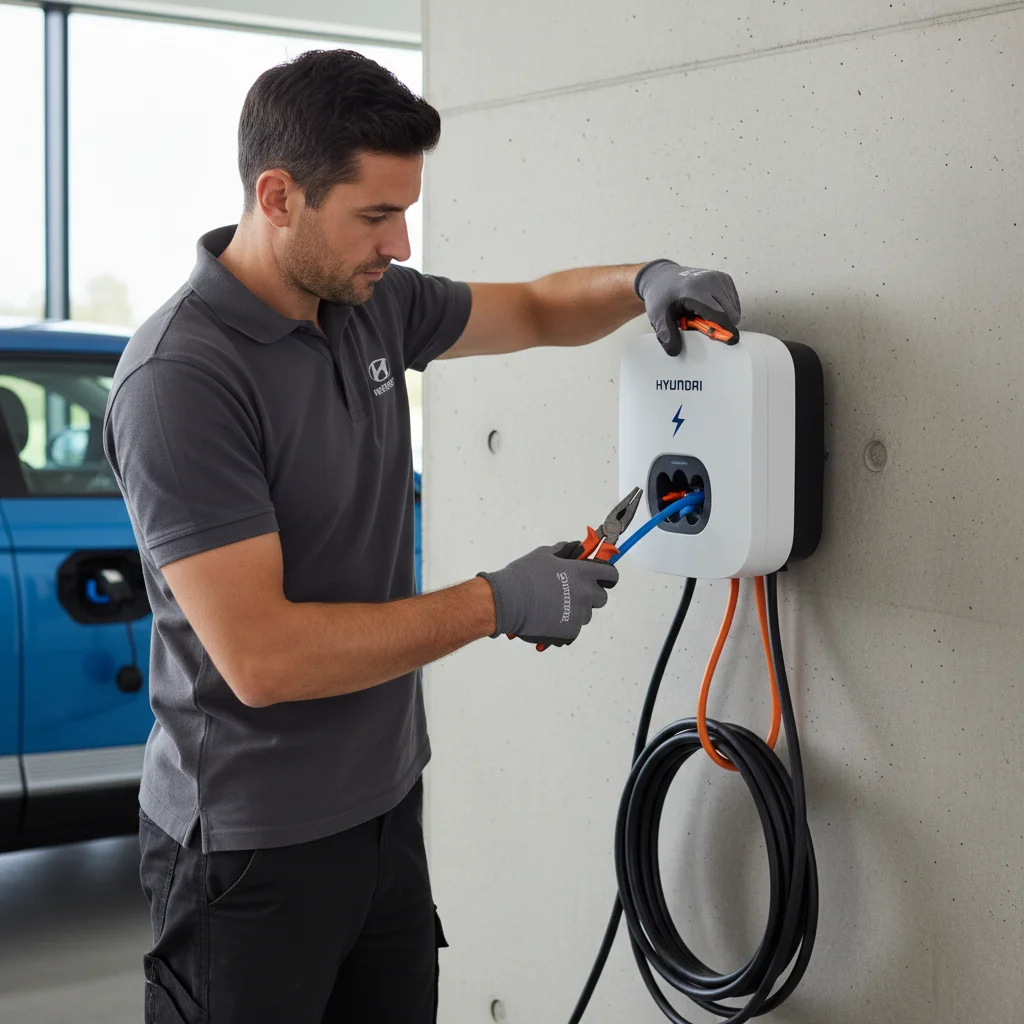
Level 2 at 240 volts is how this pack should refill overnight. The Ioniq 5 can accept up to 10.9 kW on AC. That’s a home or workplace rate, not a Supercharger-style dump. A wall outlet is Level 1. It won’t save a stranded Ioniq 5 on a shoulder here. A full Long Range refill from empty is an hours-long job. Exact clock time depends on the starting percent, the charger, and thermal limits. For timed sessions, use how long an Ioniq 5 takes to charge at home or on the shoulder.
The grid under that home charger isn’t uniform. Southern California Edison serves most of these incorporated cities. Chino, Chino Hills, Ontario, Montclair, Upland, Fontana, and San Bernardino are on SCE. So are Rialto, Highland, Loma Linda, Grand Terrace, Redlands, and Yucaipa. Corona, Norco, Eastvale, Jurupa Valley, Perris, Menifee, and Lake Elsinore are too. Wildomar, Canyon Lake, Hemet, Temecula, Murrieta, Beaumont, Calimesa, Hesperia, and Adelanto complete that SCE list. Cabazon is on SCE as well.
Some cities split. Rancho Cucamonga is mostly SCE, with Rancho Cucamonga Municipal Utility in a southeast pocket. That pocket covers over 3,900 metered businesses and residents. It includes The Enclave, Day Creek Square, The Resort, and the Victoria Gardens area. Moreno Valley is mostly SCE, with Moreno Valley Utility on newer development since 2004. MVU publishes an address lookup. Use it if you aren’t sure.
Some cities aren’t SCE at all for the home meter. Riverside is Riverside Public Utilities, serving throughout the city since 1895. Colton owns the entire electrical infrastructure within city boundaries. Banning has City of Banning Electric Utility. Big Bear Lake and Big Bear City are Bear Valley Electric Service.
Generation can split even when the wires are SCE. San Jacinto Power is a community choice aggregator on SCE’s delivery. Apple Valley Choice Energy procures for Apple Valley while SCE delivers.
Victorville residential service is SCE. Victorville Municipal Utility Services serves only the Southern California Logistics Airport and Foxborough Industrial Park. It states it doesn’t provide utility services in residential areas at this time.
SCE publishes a residential EV plan named TOU-D-PRIME. Riverside Public Utilities publishes an Electric Vehicle Rate. Other utilities publish their own EV pages. Rates change, and programs run out. Confirm the current tariff with your utility before you assume overnight charging is cheap. This page doesn’t quote a price, because your meter isn’t our meter.
Housing age shapes whether a Level 2 install is simple. ACS 2019-2023 finds 43.8% of San Bernardino County housing was built before 1980. Riverside County is 30.2%. City shares vary hard. San Bernardino city is 60.9% pre-1980. Ontario is 50.7%. Riverside city is 56.4%. Fontana is 28.9%. Corona is 25.0%. Those older panels fail in different ways than a new Eastvale build. Pack size doesn’t care. Your garage circuit does.
Daily charging habits still help the cells. Many owners keep daily use in a mid band, and save a full charge for a trip. Hyundai’s in-car limits let you set a cap. Use them. That’s owner practice, not a Charge Pro IE rule.
DC fast charging, CCS, and Tesla stalls
The Ioniq 5 can take DC fast charging on an 800-volt pack. Peak rate is up to 239 kW on a compatible stall. Under good thermal conditions, 10% to 80% can land around 18 minutes. Heat, a queued stall, or a shared cabinet can slow that. Don’t treat 18 minutes as a promise on a hot I-10 afternoon.
The native DC connector is CCS. Many Tesla Superchargers need a CCS-to-NACS adapter for this car. Calimesa is one inland Supercharger location this site already writes about. Availability changes. Check the live app. Never assume a stall is open because it was last month.
Public Level 2 and DC sites exist across valley cities, south county, and the High Desert. This page doesn’t map them. It also doesn’t claim a gap. If a stall is down, wait, try another, or call for a mobile charge. Don’t sit on a freeway shoulder hoping the next icon is close. You can’t verify that distance from this article.
Repeated DC sessions make more heat than overnight Level 2. For daily life, home AC is the gentler fill. DC is the trip tool.
When the traction pack is fine and the car still feels dead
Ioniq 5 drivers mix up a low traction pack with a dead 12-volt battery. They’re different failures. A low traction pack shows low miles and may limit power. A dead 12-volt can leave screens dark. The ready state can be missing even with a high traction percent. Roadside help for the 12-volt is a jump or a replacement on site. It isn’t a pack refill.
If the car won’t wake, run the Ioniq 5 12V checks before you assume you need electrons in the big pack.
A stuck charge door or a frozen CCS latch is another false empty moment. The pack may be fine. The connector isn’t. That’s a mechanical problem, not a kilowatt-hour problem.
If you’re already too low to finish the drive
Spec knowledge is for planning. Once the car is crawling, you need a fill or a flatbed. Charge Pro IE is a referral line. We don’t own trucks. We don’t set prices. We don’t promise an arrival clock. We match you with independent local mobile rescue operators. The operator quotes you before work starts. The operator bills you directly.
The operators we connect you with bring a 240V Level 2 source to the car. They carry a native NACS plug, plus a CCS or J1772 adapter for non-Tesla EVs. Your Ioniq 5 wants CCS on that visit. They typically add 10 to 20 miles of range in 15 to 30 minutes of charging. That’s charging time. It isn’t a drive-time promise. It’s usually enough to reach a charger you’ve already confirmed, or to get home if home is close. Operators also jump or replace a dead 12-volt on site. They handle Tesla and every major EV brand, including Hyundai. The pros we connect you with are licensed.
If you need that kind of help, start at out of charge recovery or non-Tesla EV rescue. We serve cities across the Inland Empire. Coverage includes the valley, south county, the High Desert, and the mountain communities named on our Inland Empire EV charging hub.
Stay with the car if you’re on a freeway shoulder. Set hazards. Keep people behind the barrier when you can. Call for help rather than walking a grade at night.
Frequently asked questions
What is the Hyundai Ioniq 5 battery size?
Standard Range is 58.0 kWh gross, about 54.0 kWh usable. Long Range is 77.4 kWh gross, about 74.0 kWh usable, on 2022 to 2024 ratings. EPA stickers read 220, 303, or 260 miles by drive. Confirm your year on the window sticker. The inland roads above are why that sticker isn’t the last word.
Why is usable capacity lower than the spec?
Hyundai holds a buffer at both ends of the pack. Gross is the full rating. Usable is what you’re allowed to spend. The dash percent tracks usable energy. That’s normal lithium-pack design, not a defect.
What should I do if I’m low after a Cajon or I-10 climb?
Don’t keep climbing on a shrinking estimate. Confirm a working stall in your charging app, or call for a mobile Level 2 visit. Charge Pro IE is at (909) 250-2881. An independent operator quotes before any charging starts. If the car won’t ready at all, check the 12-volt path first.
A 58 or 77.4 kWh pack is a tank size. On Cajon and I-10, the climb is what spends it.