Your pack hits empty on the Cajon climb toward Victorville. The two numbers people reach for first are AAA and the Freeway Service Patrol. Those calls move a stalled car. They aren’t a Level 2 charge at the bumper.
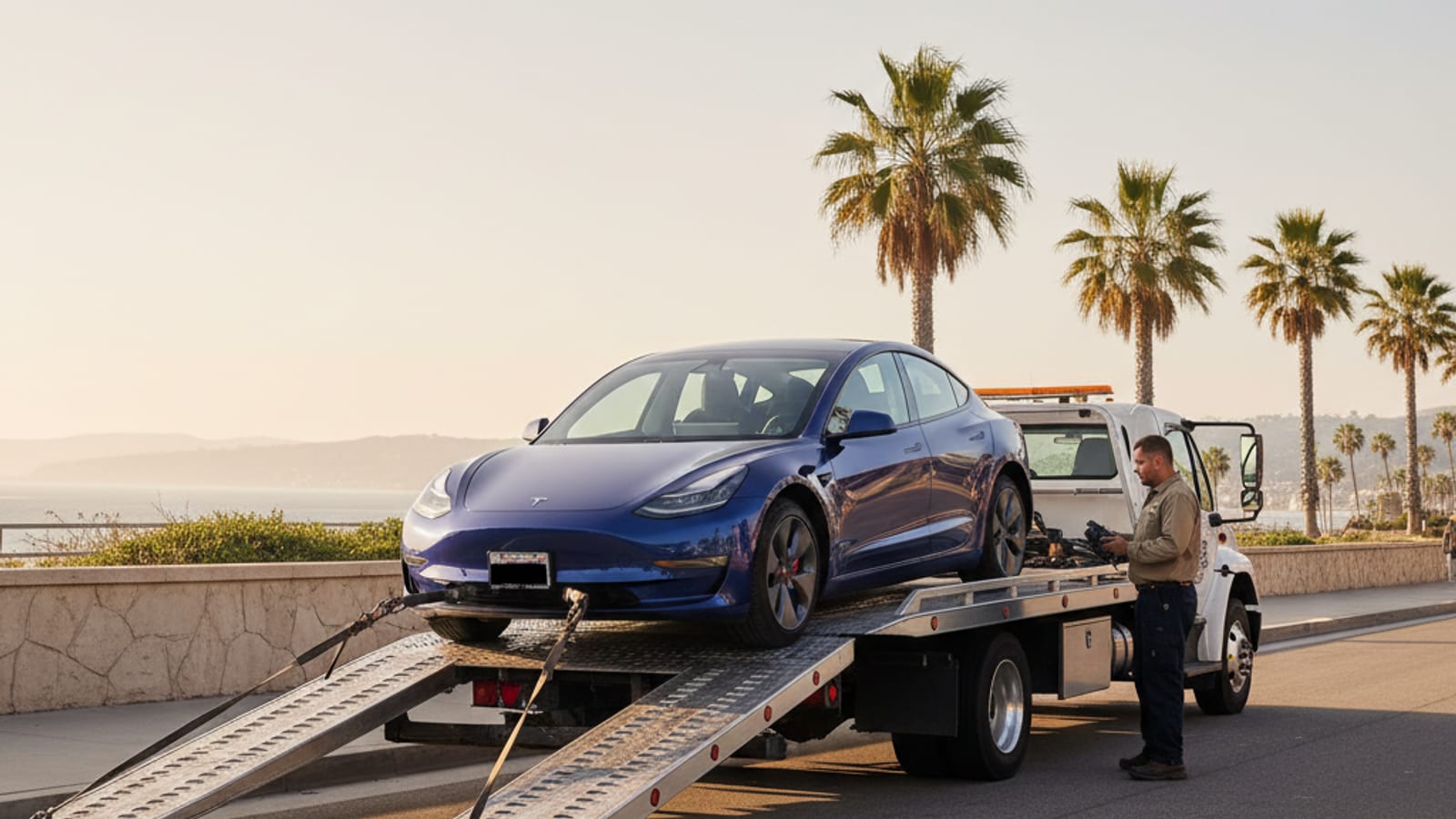
AAA vs mobile EV charging is a mismatch of jobs, not a loyalty test. A membership club is built to tow, jump a 12V, or change a tire. A mobile EV charging visit is built to add range where you sit. Freeway Service Patrol materials in both counties never mention electric vehicles. Don’t wait for that truck to treat a dead pack like an empty gas tank. Those pamphlets never promised it.
Charge Pro IE is a referral line for the Inland Empire. It matches you with an independent operator. It doesn’t own trucks, set prices, or do the work. The operator quotes you before anything starts, then bills you directly.
The pamphlets never promised a charge
Riverside County and San Bernardino County both publish Freeway Service Patrol materials. Those pages never mention electric vehicles. They don’t describe a NACS plug, a CCS adapter, or a pack at zero. They don’t walk a driver through a Level 2 hookup on the shoulder.
That silence matters on inland roads. The I-15 grade toward the High Desert is one kind of stall. A warehouse row in Fontana is another. The 91 through Corona and the 215 through Moreno Valley aren’t the same stop. None of those scenes get an EV chapter. The FSP pages never wrote one.
The patrol can still stop. Ask them what they can do when they roll up. Don’t assume they carry a 240-volt source. Confirm the current program with the county or the patrol itself.
AAA is a separate club. This page couldn’t confirm a published AAA offer for on-site EV charging in either county. AAA sets its own coverage. Ask the club what they’ll send for an empty pack. If the answer is a flatbed to a charger, that’s a tow. It isn’t a charge.
For a Tesla-shaped version of the same fork, see AAA or a local Tesla rescue: what actually shows up.
Empty pack, dead 12V, or a car that needs a shop
An EV can look fully dead for more than one reason. Sort that before you pick a truck.
The high-voltage pack is the propulsion battery. When it’s empty, the car may still light up, then refuse to roll far. What you need is energy into the pack. A tow to a public stall still leaves you waiting on that stall. A mobile operator brings a 240V Level 2 source to the car. Native NACS on Teslas. CCS or J1772 adapters for other brands. Once plugged in, the visit typically adds 10 to 20 miles of range. That takes 15 to 30 minutes of charging. That clock is charging time. It isn’t an arrival time.
The 12V battery wakes computers, locks, and contactors. If that one is dead, the car can look bricked. Miles can still sit in the pack. A jump, or a replacement on site, is the usual path. Operators the line sends can jump or replace a dead 12V on site. Confirm the plan on the quote. For the 12V-versus-pack split, electric car died: charge it, jump the 12V, or tow it walks the same fork.
A mechanical failure is a third case. A bent wheel, a collision, a drivetrain that shouldn’t roll. Then a flatbed is the right tool. You’re not arguing AAA vs mobile EV charging anymore. You’re moving a disabled vehicle to a shop.
What a mobile visit is, and what it isn’t
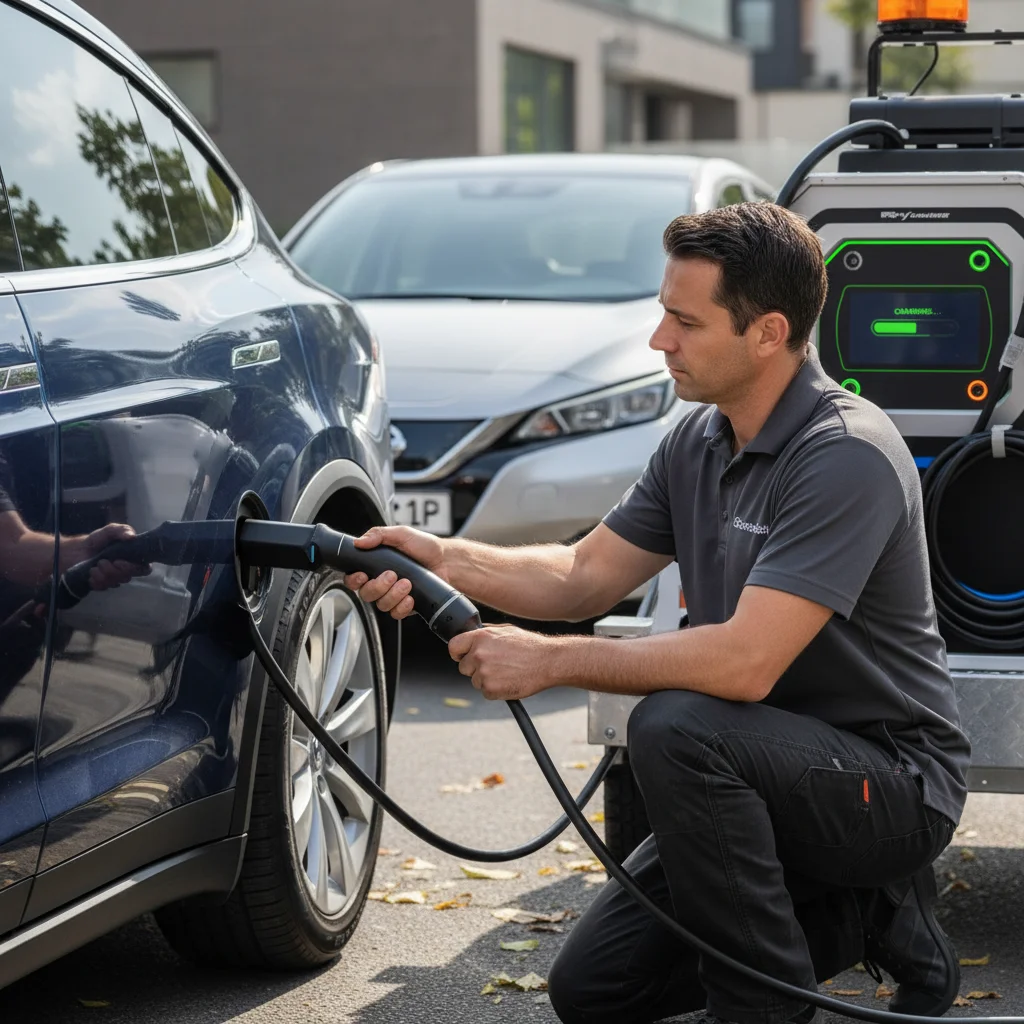
You call the referral line, give your location and the car. Charge Pro IE matches you with an independent local operator. That operator quotes the visit before work starts. You accept, or you don’t. There’s no membership to prepay.
On site, the operator brings the Level 2 source to the bumper. Teslas take the native NACS plug. Other major EV brands take CCS or J1772 through an adapter. The goal is enough range to drive, not a full pack. Ten to 20 miles is the typical add. It lands in 15 to 30 minutes of charging.
That’s enough to clear the Cajon shoulder and roll toward Victorville, or back down toward San Bernardino. It’s enough to leave a Fontana warehouse row. It’s enough to get off SR-60 in Jurupa Valley without a hook. It isn’t a home install, a Supercharger, or a repair shop.
What a mobile EV charging visit actually is, and isn’t stays on that distinction.
The line doesn’t promise when someone arrives. Demand, grade, and where you sat all change that.
Inland roads aren’t one stall
The Inland Empire is two counties and several electric maps. Southern California Edison covers a wide share of the valley. Riverside Public Utilities serves the City of Riverside. Colton owns its electric system inside city limits. Banning runs a city electric utility. Bear Valley Electric Service covers Big Bear Lake and Big Bear City. Moreno Valley and Rancho Cucamonga are split cities. San Jacinto Power and Apple Valley Choice Energy procure while SCE delivers.
None of that plugs your car on I-10. It does explain why charging at home later isn’t a shoulder plan. A Riverside house on RPU isn’t a Colton house. A Big Bear driveway on Bear Valley isn’t an Ontario warehouse on SCE. The stall in front of you still needs range, a 12V wake, or a tow.
Heat, elevation, and a long grade all spend pack. They don’t change the AAA vs mobile EV charging fork.
Warehouse and airport-adjacent lots around Ontario and Fontana add a second problem. A full-size flatbed may not fit the row. A smaller rescue vehicle might. Ask before you request a hook into a structure.
For the Cajon-specific version of an empty pack, out of charge on I-15 at the Cajon climb toward Victorville stays on that grade.
When the membership club is still the call
Keep AAA, or keep whatever club you already pay, when the car must move as a vehicle. Collision damage, a wheel that shouldn’t turn, a car that has to reach a shop. A charge won’t fix those. A flatbed might.
You already carry the membership for gas cars in the driveway. That card still handles lockouts and many tire calls. Tesla flat tire coverage, and the Inland Empire’s free freeway option is the tire-shaped cousin of this one.
Ask AAA whether your EV is listed, and whether they’ll flatbed it. Confirm the current terms with them. This page doesn’t publish club prices. AAA sets those, and they change.
If Tesla roadside is still on the car, open the Tesla app. Read what it offers. Some manufacturer visits end in a tow toward a Supercharger. That’s still a tow-to-charge plan, not a bumper charge. Confirm it in the app.
When the mobile visit is the better fit
Call for a mobile charge when the car is intact and the pack is the problem. You’re on the shoulder with an empty propulsion battery. You need miles, not a ride on a hook. You’re in a driveway in Eastvale or Menifee. The home plug didn’t save you. You’re in a tight lot where a flatbed is a fight. The 12V is dead, or the charge port won’t release.
Mobile EV charging or a tow: which gets you moving is the short version of that choice.
You can hold both numbers. The club handles the mechanical day. The referral line handles the empty-pack day. They aren’t rivals. One moves a disabled car. The other adds range, or wakes a 12V, where you already are.
Operators the line sends handle Tesla and every major EV brand. Quote first, then work. Charge Pro IE doesn’t set that quote.
Get the car as far right as you can. Tell the person you call the freeway, the direction, and the nearest city: Corona, Colton, Hesperia after Cajon, Wildomar toward the Ortega.
The fork in plain words
AAA vs mobile EV charging isn’t which brand you like. It’s whether the car needs to be moved, or the pack needs energy. FSP materials in both counties never mention electric vehicles. Don’t wait on a charge those pages never offered. Confirm AAA’s dispatch with AAA. If you want a quoted Level 2 visit on inland roads, call (909) 250-2881. The operator quotes before they start.
Frequently asked questions
Do Freeway Service Patrol trucks charge an empty EV here?
Riverside County and San Bernardino County FSP materials never mention electric vehicles. They don’t describe on-site charging. A patrol truck may still stop. Ask what they can do. Don’t wait for a Level 2 hookup those pamphlets never listed.
Does AAA include on-site EV charging in the Inland Empire?
This page couldn’t confirm a published AAA on-site EV charging offer for these counties. Ask AAA what they’ll dispatch for an empty pack. If they send a flatbed to a charger, that’s a tow, not a bumper charge.
What does a mobile EV charging visit add?
Independent operators bring a 240V Level 2 source to the car. Native NACS, or CCS or J1772 through an adapter. The typical add is 10 to 20 miles in 15 to 30 minutes of charging. The operator quotes you first and bills you directly. Charge Pro IE doesn’t set the price.