You plugged in before bed and woke up to the same percent. An EV that sat on the cable all night often never took energy. The usual cause is a missed charge window. A sleeping car or a quiet panel cut can do the same. In San Bernardino County that mix is a driveway problem. The port can look seated, and the light can look normal. The pack still didn’t move.
Why older San Bernardino County houses see this more
This county’s housing is older than Riverside County’s. ACS 2019-2023 data puts 43.8% of San Bernardino County units as built before 1980. Riverside County sits at 30.2%. In San Bernardino, 60.9% of housing predates 1980. Montclair is 68.5% and Bloomington is 62.5%. Grand Terrace is 60.6% and Redlands is 60.4%. Upland is 55.9%, Ontario is 50.7%, and Colton is 51.8%. Yucaipa is 52.5%.
Those shares are Census figures, ACS 2019-2023, not estimates. Newer tracts tell a different story. Eastvale is 2.2% pre-1980, and Temecula is 6.5%. Perris is 12.4%, Fontana is 28.9%, and Victorville is 19.6%. An overnight miss in an older valley house often starts at the panel. The utility clock is the other common culprit. It’s less often a ruined traction pack.
Who sells the power isn’t one map. Chino, Ontario, Fontana, and San Bernardino sit on Southern California Edison. Colton is absent from SCE’s served-cities list. The City of Colton Electric Utility owns the electrical infrastructure inside city limits. Riverside runs Riverside Public Utilities. Rancho Cucamonga is split. SCE covers most of the city. Rancho Cucamonga Municipal Utility serves a southeast pocket of over 3,900 metered businesses and residents. That pocket includes The Enclave, Day Creek Square, The Resort, and the Victoria Gardens area. Moreno Valley is split too. SCE shares that city with Moreno Valley Utility. MVU has served newer development since 2004 and now lists over 6,500 customers. Banning has City of Banning Electric Utility. Big Bear Lake and Big Bear City sit on Bear Valley Electric Service.
SCE publishes a residential EV time-of-use plan, TOU-D-PRIME. Riverside Public Utilities publishes an Electric Vehicle Rate. Confirm current off-peak hours with the utility named on your bill. The car only knows the schedule you saved. Miss the window, and morning looks like a failed charge.
A charge window that never opened
Every major EV will wait for a departure time or an off-peak window. On SCE streets, that wait is often set to match TOU-D-PRIME. Confirm today’s hours with SCE. Don’t reuse a window you saved last year. If your bill is Colton, Banning, Bear Valley, RCMU, or Moreno Valley Utility, confirm that utility’s hours. Don’t copy an SCE window onto their meter. See what shapes Tesla charging cost across Inland Empire utilities for the local rate map.
The setting is easy to save once and forget. A shift change in Ontario or Fontana can miss the window. So can a late plug-in after dinner. An app update can restore a default you never wanted. Open the app or the center screen. Look for scheduled charging, charge on departure, or off-peak charging. Turn the schedule off for one morning. If a session starts, the car was waiting, not broken.
The car went to sleep on a live cable
Plug in at dusk with a window that opens after midnight. Some cars then drop into a low-power sleep. They don’t always wake when off-peak hours begin. You still have a seated handle. You may still have a standby light. The percent in the morning matches last night.
Open and close a door, unlock with the fob, or start climate from the app. If charging begins a few minutes later, the computer was asleep. Unplug and reseat once if those tricks do nothing. Then check the charge limit. A car that already hit its charge limit can sit all night. Morning looks like a failed session.
What the morning usually means
| What you see | Likely cause | Check first |
|---|---|---|
| Same percent as bedtime, cable still in | Charge window set later than you think | App or dash for departure time or off-peak window |
| Charge starts after you unplug and plug back in | Sleep state before the window opened | Door, fob, or climate from the app, then watch |
| Charge ran, then stopped mid-night | Limit already reached, or a real cut | Charge limit before you assume a fault |
| Charger light looks normal, car screen stays quiet | Loose handle or a missed lock-in | Reseat until the port clicks |
| Breaker or GFCI tripped at the panel | Circuit lost power, not a pack failure | Reset once, then stop if it trips again |
When it’s the house, the plug, or the 12V
A forgotten schedule explains a lot of mornings. It doesn’t explain all of them.
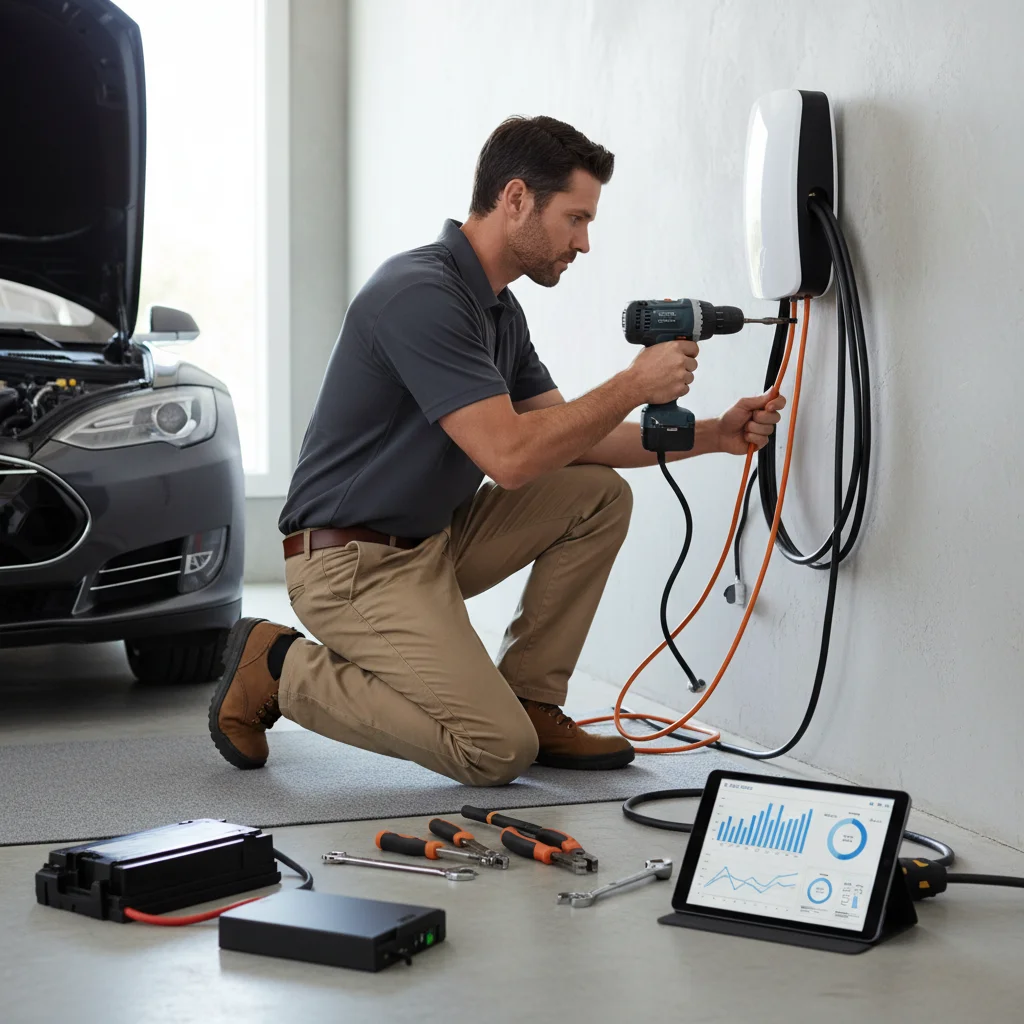
A handle that backed out a few millimeters will still sit in the port. It can still fail to start a session. Wall units with a short reach put tension on the cable. That’s common on older driveways where the box was added later. Push it home until it clicks.
A tripped breaker or GFCI is the older-house version of the same empty morning. The cable stayed connected. The circuit went dark. Older Inland Empire panels and EV chargers cover what usually fails first on pre-1980 stock. Reset the breaker once. If it trips again, stop. Repeated flips hide a fault. Call a licensed electrician for the circuit. Read what’s making your EV charger trip the home breaker next. Use it if the switch won’t stay up.
Most home charging boxes use a status light. A normal standby color with an error on the car usually points at the schedule. It can also be a sleep state or the 12V. A fault-colored light on the box points at the charger, not the traction pack.
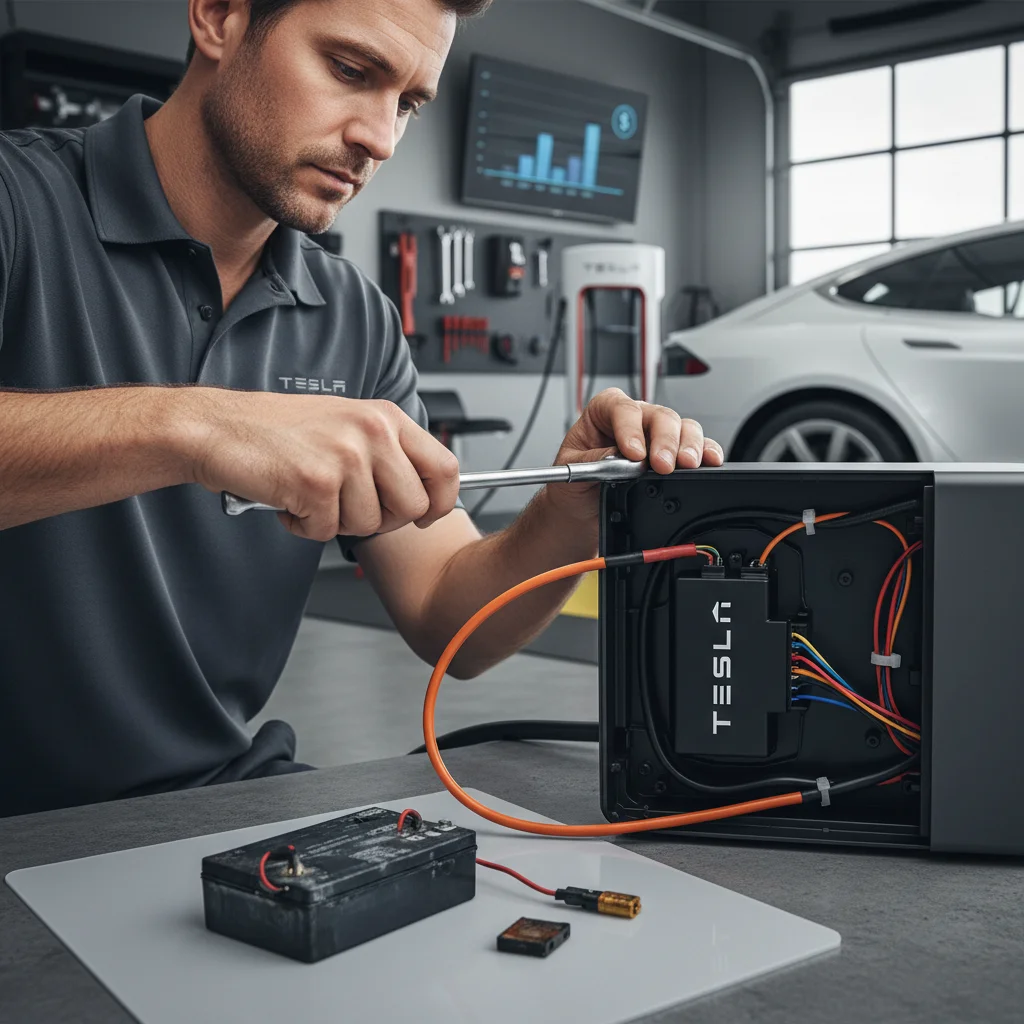
The 12-volt battery still runs the computer that starts a charge. If that battery is weak, a session can begin and then drop with no drama. When the 12-volt dies covers that look. The traction pack can still hold range.
If you have to leave and the pack is still thin
Checks are fine when you have time. They’re not fine when a Fontana shift or an I-10 run is already tight. Don’t gamble on a percent that never moved.
Charge Pro IE is a referral line. We match stranded drivers with independent local operators. We don’t own trucks, employ technicians, or set prices. The operator brings a 240V Level 2 source to the driveway. Tesla owners get a native NACS plug. Other EVs use a CCS or J1772 adapter. On-site charging time is typically 15 to 30 minutes. That usually adds about 10 to 20 miles of range. That’s charging time, not a promise of when someone arrives. The operator quotes you before starting and bills you directly.
If you’re trying to stretch what’s left, read what to do before you strand. For a Level 2 visit at the curb, start with mobile EV charging. Call (909) 250-2881 when you want us to connect you with an operator.
Why did the dash say charging if the percent never moved?
The car was often waiting on a window that hadn’t opened yet. A session can also sit at a charge limit you already hit. Check the schedule and the limit in the app before you assume the hardware failed.
Does sitting plugged in with no session hurt the pack?
Sitting on the cable with no session doesn’t hurt the pack. The software is choosing not to pull power yet. That can be a schedule, a sleep state, or a limit that’s already met.
Should I keep resetting a breaker that dumped overnight?
Reset it once. If it trips again right away, stop and call an electrician. A breaker that keeps dumping is protecting the circuit. Repeated resets can hide a real fault on an older panel.