People asking how long Tesla batteries last in 2026 usually mean the pack. In the Inland Empire, the 12V battery fails first. Heat, grades, and long idle parking take that small battery out. The high-voltage pack is usually still holding range.
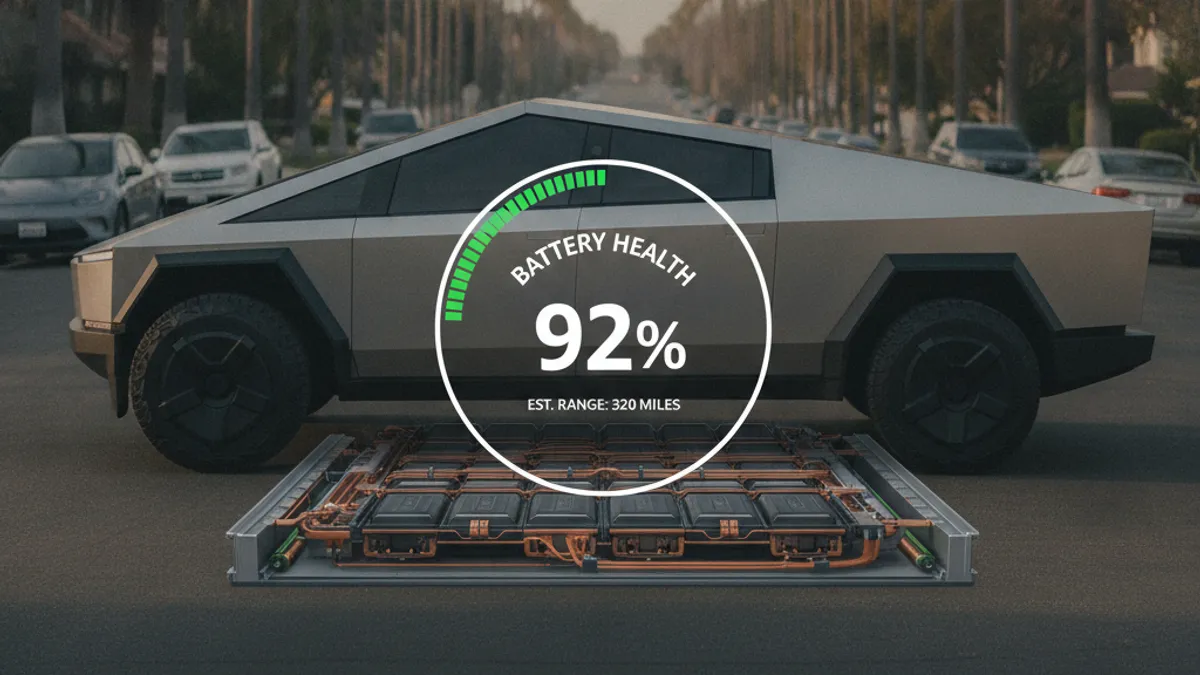
Two batteries, two timelines
Every Tesla has a floor pack and a 12V battery. The pack stores the miles you drive. The 12V runs locks, the screen, and the wake-up contactors. If the 12V is dead, nothing on the car answers. The phone app can still show a charged pack. That mismatch is a low-voltage failure, not pack wear. Start with our Tesla 12V model guide if the car won’t wake.
Tesla designs the traction pack to outlast the rest of the car. This page can’t publish a mileage wear curve Tesla doesn’t print. Tesla does publish battery and drive-unit warranty terms. Those terms follow the car, not the seller. Coverage varies by model and in-service date. Confirm the current language in Tesla’s app. Then read what that warranty covers here.
Heat, grades, and cars that sit
Ontario, Fontana, and Riverside sit on the valley floor. Summer heat there is hard on a small 12V. High Desert parking in Victorville and Hesperia adds more of the same. Adelanto and Apple Valley sit in that heat too. A weekend in Big Bear Lake adds a climb both ways. Big Bear City and Lake Arrowhead work the same way. Then the car often sits in a lot after the drive. Cabin climate features and security modes keep drawing power. The pack can still show plenty of range while the car stays dark.
Warehouse rows in Fontana and airport lots in Ontario are the idle version. A Tesla left for a shift or a flight is a 12V risk. It isn’t automatic pack damage from sitting. Dark cars in those lots need airport and warehouse EV rescue, not a pack diagnosis.
The climb toward Yucaipa and Highland uses energy. So does the I-10 rise through Beaumont and Banning. Running Springs and Crestline add mountain parking after a grade. That can empty a pack if you started low. It doesn’t, by itself, mean the pack is worn out.
Home charging here runs on several utilities
Most of Riverside County and San Bernardino County sit on Southern California Edison. The City of Riverside is Riverside Public Utilities, serving since 1895. Colton owns the electric system inside city limits. Banning runs its own city electric utility. Big Bear Lake and Big Bear City sit on Bear Valley Electric Service. Rancho Cucamonga is mostly SCE, with a municipal pocket. Moreno Valley is split with Moreno Valley Utility. In Apple Valley, Apple Valley Choice Energy procures while SCE delivers.
Those utility names shape how you charge overnight at home. They don’t set a pack-life number Tesla publishes. Most owners shouldn’t sit at 100% daily. Some lithium-iron-phosphate packs are an exception. Those owners should take a full charge often. Confirm the habit for your pack in the owner’s manual or the in-car documentation for your model. Supercharging on a trip is normal Tesla travel charging. Making DC fast charging your only habit adds extra heat cycles. A home connector is gentler on the cells. Mix in overnight charging when you have a home meter.
Housing age changes where cars sit at night. ACS 2019-2023 figures show 43.8% of San Bernardino County housing was built before 1980. Riverside County is 30.2% on that same vintage. In the City of San Bernardino the share is 60.9%. Eastvale is 2.2%, and French Valley is 2.3%. Temecula is 6.5% on that pre-1980 housing share. Cars on an older San Bernardino street sit differently overnight. A new garage in Eastvale is a different setting. None of that proves pack wear on its own. It does change how long a 12V sits without a charge. For heat habits that you can control, see EV battery care in Inland Empire heat.
How to tell pack age from a 12V no-start
Tesla doesn’t give you a phone-style battery-health score. Compare current max range to the original rated range in settings. A modest gap isn’t, by itself, a failed pack. A sudden, large drop is a Tesla service question. A car that won’t power on is usually the 12V. A normal range number in the app supports that read. Walk through when Tesla 12V failure hits.
Buying a used Tesla on inland miles
Odometer anxiety is usually about the pack. Ask for the current max range first. Compare it to that model year’s rated range. A modest gap is expected wear. A steep gap is a service conversation before you buy. Also ask when the 12V was last replaced. In this climate, that small battery is the wear item you’ll feel. Tesla’s battery warranty stays with the vehicle. It tracks the in-service date, not the sale date. Confirm remaining term in Tesla’s records.
Outright pack replacement outside a crash is uncommon. Tesla’s published warranty is the first place to check. This page won’t guess a replacement price. For the process local owners actually face, see what Tesla pack replacement involves.
Empty pack versus a dark 12V
Those are different roadside jobs. An empty pack needs energy into the charge port. The operators Charge Pro IE connects you with bring a 240V Level 2 source. They use a native NACS plug. CCS or J1772 adapters cover non-Tesla EVs. Charging time is typically 15 to 30 minutes. That usually adds about 10 to 20 miles of range. That’s charging time, not an arrival time. A dark 12V needs a jump or a replacement on site. See Tesla 12V jump help for that job. The operator quotes you before work starts and bills you directly. Charge Pro IE doesn’t own trucks or set a price.
Frequently asked questions
Does inland heat wear a Tesla pack out fast?
Tesla doesn’t publish a heat-specific wear number for this market. What shows up first locally is 12V failure after heat, grades, and idle parking. Treat a no-start as low voltage until a shop proves otherwise.
Does Supercharging ruin the main battery?
Occasional Supercharging is normal Tesla travel charging. Using it as your only method adds more heat cycling than home charging. Mix in overnight charging when a home meter is available.
Does the 12V or the main pack die first?
The 12V almost always strands you first in this climate. The pack is built for the life of the car. Confirm remaining pack coverage in Tesla’s current warranty terms.
If your Tesla won’t wake, or the pack is empty, call (909) 250-2881. Charge Pro IE matches you with an independent local operator. The operator quotes before starting any work. This number isn’t a promise of when someone arrives.