A Tesla battery voltage question needs one detail first: which battery system? The low-voltage system and main traction pack serve different jobs. They also require different roadside responses.
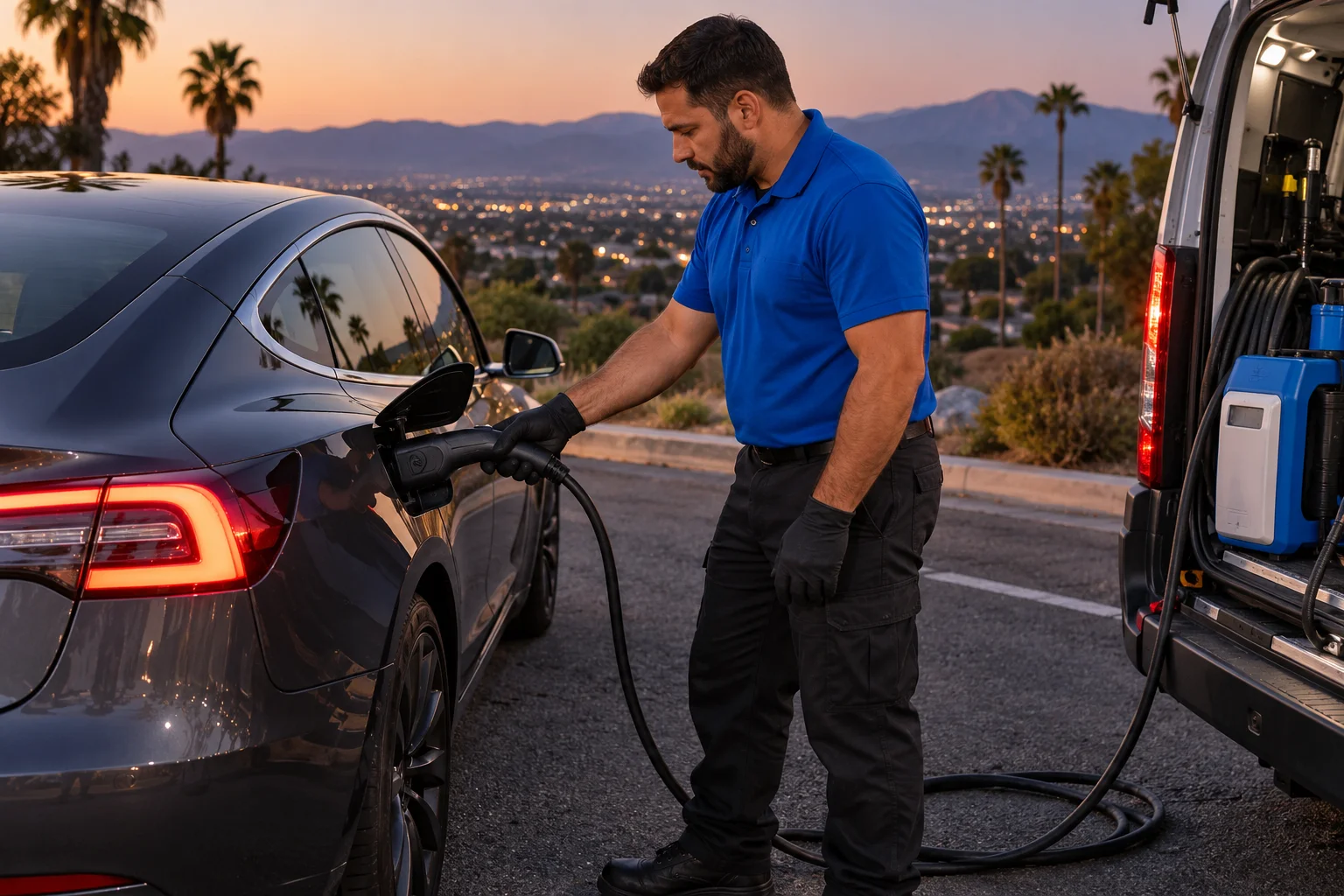
Tesla has separate low-voltage and traction systems
A Tesla doesn’t have one battery system that handles every electrical task. It has a low-voltage system and a separate main traction system.
That distinction answers the search more accurately than one voltage figure. A driver asking about a jump pack usually means the low-voltage side. Someone asking about driving range or charging usually means the main pack.
People often call the low-voltage side the “Tesla 12V system.” That label appears in everyday owner conversations and service searches. However, it isn’t a reliable specification for every Tesla. The approved source material doesn’t confirm one low-voltage rating across every model, build, and year.
The same limit applies to Tesla main battery voltage. No single verified figure in our source ledger covers the whole vehicle lineup. Publishing one number as the answer would hide differences that matter.
Tesla’s current Model 3 and Model Y manuals distinguish low-voltage access from the vehicle’s other electrical systems. They also show that component locations and procedures can vary. Your model-year manual remains the right authority for your car.
The U.S. Department of Energy’s electric vehicle overview provides broader EV context. For your Tesla’s specifications, use its current manual or in-car documentation.
If you’re trying to understand why Teslas need a separate small battery system, read our guide on whether Teslas have a 12V battery. Keep the terms “low-voltage battery” and “main pack” separate while troubleshooting.
Why one voltage figure cannot describe every Tesla
Search results often present one Tesla battery voltage as a universal answer. Our approved sources don’t support doing that. They don’t establish a single low-voltage or traction-pack rating for every Tesla.
A model name alone may not settle the question. Build details and the low-voltage system can affect the correct connection points and procedure. Tesla’s current manuals specifically show that jump-post and ground locations vary by model, build, and system.
That variation is why a roadside operator should identify the exact vehicle first. Useful details include the model, model year, visible warning, and whether the car responds. The VIN-linked manual or in-car documentation can then provide the governing instructions.
This also affects common battery questions:
- The number of batteries in a Tesla can’t be answered accurately here with one universal count.
- Tesla battery lifespan isn’t confirmed by an approved model-specific source in this ledger.
- Main-pack replacement cost isn’t verified as one standard figure.
- Advice about leaving a Tesla plugged in after charging depends on current manufacturer guidance.
For those questions, check the manual and warranty documents tied to your vehicle. For cost, request a vehicle-specific diagnosis and written quote. Don’t rely on a generic number that omits the model, build, condition, and work required.
The broader California Energy Commission covers zero-emission vehicles and charging in California. It doesn’t replace the Tesla instructions attached to your specific car.
The honest answer to “how many volts Tesla battery” is therefore conditional. First identify the battery system. Then confirm the exact rating in the manual for that vehicle.
What the low-voltage system controls
The low-voltage system matters because the car needs it for basic access and response. Current Tesla Model 3 and Model Y manuals connect low-voltage power with hood access and jump procedures. They also document electrically operated charge-port functions.
A fully unresponsive screen, app, locks, and charge-port door can indicate a low-voltage-power problem. That pattern isn’t a complete diagnosis. Another fault may produce similar symptoms, so treat it as a clue.
The charge-port door offers a useful example. Tesla manuals list normal opening paths through supported controls. They also warn drivers not to force the door. If every normal control path fails with the rest of the car dark, low-voltage power deserves attention.
The external hood-release terminals are another source of confusion. On current Model 3 and Model Y instructions, those terminals release the hood latches. They don’t charge the low-voltage battery. The actual jump points are under the hood, and their locations vary.
That difference matters in an Ontario parking lot or Riverside driveway. Releasing the hood isn’t the same as supplying power at the approved jump points. Guessing at terminals can turn a simple access problem into a larger one.
Use the instructions for your exact model and year. Don’t copy a procedure from a different Tesla.
Our Tesla 12V battery jump service page explains when a matched operator may help with a low-voltage problem. Charge Pro IE makes the referral. The licensed independent operator performs the physical work.
Why a jump pack cannot recharge the main pack
A low-voltage jump and traction-pack charging solve different problems. A jump pack is intended for the low-voltage side when the vehicle-specific procedure allows it. It isn’t a substitute for charging the main traction pack.
That difference explains why the tool must match the symptom. A dark, unresponsive car may point toward low-voltage trouble. A responsive car showing depleted driving energy presents a different roadside problem.
Don’t assume that restoring low-voltage response adds usable driving range. It may allow the vehicle to wake or provide access, depending on the fault. It doesn’t turn a small jump source into main-pack charging equipment.
The reverse mistake also wastes time. Connecting the car to charging equipment may not resolve a low-voltage failure if the Tesla can’t operate the controls needed for the charging session. The car’s messages and current manual should guide the next step.
Main-pack charging requires compatible EV charging equipment. A roadside operator offering mobile charging may be able to add limited range when the location and vehicle permit it. The approved rescue figure is 10 to 20 miles of range during 15 to 30 minutes of Level 2 charging. That describes charging time, not operator arrival.
A tow may be the safer or more suitable outcome when charging isn’t practical. Location matters. A Tesla stopped in a Riverside driveway presents different access conditions from one disabled near the I-15 Cajon Pass climb.
Our Tesla roadside rescue page covers the available referral path. The operator determines whether the situation calls for low-voltage help, mobile charging, or towing.
How to identify the system that failed
Start with observations that don’t require opening electrical compartments. Note what the car still does, what it displays, and which normal controls respond.
Check these signs:
- Does the touchscreen wake?
- Do the app and locks respond?
- Does the charge-port door open through a normal supported method?
- Does the car show a warning message?
- Does the display show remaining driving energy?
- Is the car parked safely and reachable?
A dark screen, silent locks, an unresponsive app, and a charge-port door that won’t open can indicate low-voltage trouble. It still doesn’t prove the diagnosis. Don’t force the charge-port door or assume exposed terminals serve the same purpose.
A responsive car with a visible low-energy condition points the conversation toward the main pack. Record the exact display message. Avoid paraphrasing it when speaking with an operator.
If the vehicle is connected at a public charger, confirm whether charging actually began. A connected cable doesn’t establish that energy is flowing. Charger faults, vehicle messages, connector issues, and battery-system problems can look similar from outside.
Use our dead pack or 12V guide for a closer symptom comparison. Keep the model, model year, location, and warning text ready when requesting help.
On a traffic lane or exposed freeway shoulder, personal safety comes before battery diagnosis. Call emergency services if the vehicle remains in a traffic lane. Don’t stand beside moving traffic to inspect the car.
When to match a local roadside operator
Match the operator to the suspected system and location. A licensed operator experienced with Tesla low-voltage access may suit an unresponsive car. A depleted main pack may require compatible mobile charging or a tow.
Tell the referral service whether the Tesla is dark, responsive, plugged in, or displaying a warning. Also describe access conditions. A home driveway in Fontana differs from a parking structure, roadside shoulder, or mountain route.
Charge Pro IE connects Inland Empire drivers with licensed, independent local EV operators. We don’t test batteries, perform jumps, charge traction packs, tow vehicles, set prices, or promise arrival times. The customer contracts with and pays the matched operator directly.
Before any work begins, confirm the operator’s proposed service. Ask whether the plan involves low-voltage access, a jump, mobile charging, or towing. Request the price from that operator before authorizing work.
Don’t ask for “a battery jump” if the main pack is depleted. Don’t ask for mobile charging when the car is completely unresponsive without describing that condition. Clear symptoms help the operator bring equipment suited to the situation.
The exact voltage specification still comes from the Tesla manual for that model and year. The roadside decision comes from the car’s symptoms, location, and safe access. Those are separate questions, and treating them separately avoids the most common confusion.
When to call us
Call when your Tesla is unresponsive, won’t accept a charge, or may have a depleted main pack. A mobile EV rescue operator can assess whether the situation calls for low-voltage help, charging, or towing.
Call us at (909) 250-2881 and we’ll connect you with a local EV rescue operator.