The EV charger stuck in your car is still holding the latch. The port never got a clean release. That leaves you at a public stall in Ontario or Fontana. The pack may already be too low to roll onward. Freeing the cable is the first job, and getting moving is the second.
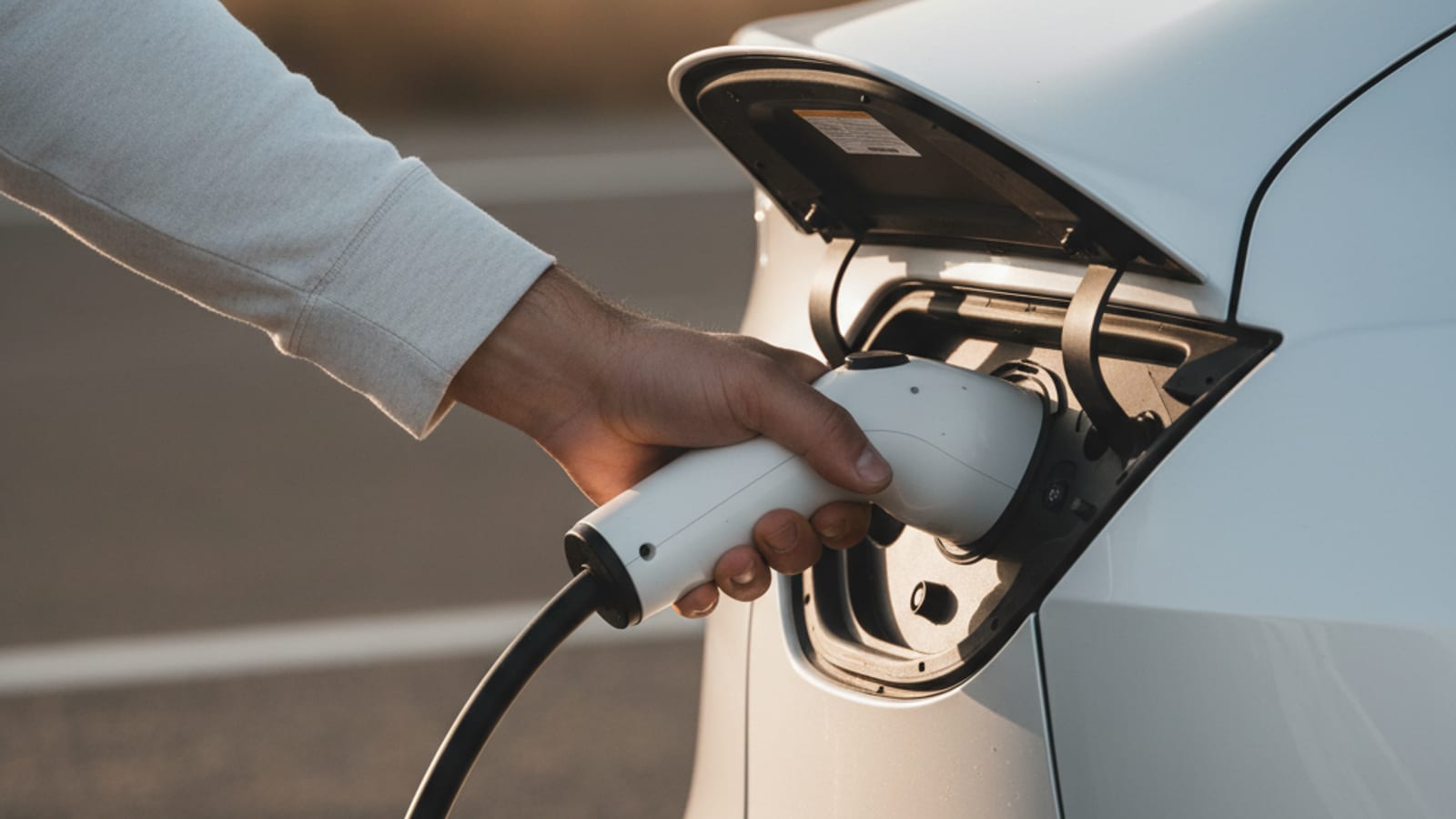
A locked plug doesn’t add range
You’re blocking a stall. That’s the social problem. The range problem is quieter. Inland Empire driving is valley heat, Cajon grades, and warehouse-shift miles. A session that paused mid-charge didn’t put energy in the pack. Unplugging, if you can, still leaves you where you stood. Read what to do when a public charger isn’t working while you sort the latch. If the connector never comes out, that advice can’t move the car.
Charge Pro IE is a referral line. We match stranded drivers with independent local operators. Those operators jump or replace a dead 12V on site. They also bring a 240-volt Level 2 source to the car. Tesla takes a native NACS plug. Other EVs use a CCS or J1772 adapter. That hookup typically adds 10 to 20 miles of range. That takes 15 to 30 minutes of charging. That’s charging time, never an arrival time.
The latch is electric, so it can stall
The port uses a small solenoid to grab the connector. The car keeps that latch closed while current is flowing. It also keeps it closed so nobody walks off with your session. When the car says unlock, the solenoid needs a healthy 12-volt feed. No 12-volt power, no release.
A paused session can freeze the same latch. The charger looks idle, but the car still thinks it’s plugged in. Stop the session from the screen first. Wait until the car confirms charging has stopped. Then press the handle button. Don’t yank on the cable yet.
Try the 12V before you peel trim
Valley heat is hard on that small battery. So is a long sit in a Fontana warehouse lot or an Ontario airport row. The high-voltage pack can still show miles. The solenoid still won’t move. Dim dash lights, fussy door handles, and a slow screen are the usual clues.
Jump the 12-volt battery, then try the release again. How to jump start an electric car covers the 12V path without guessing at the pack. If you had to jump it to free the cable, that battery is already tired. Plan to replace it.
Software is the next usual stall. Tesla owners can hold both steering-wheel scroll wheels for about 10 seconds. Rivian owners can press and hold the cruise stalk down for 10 seconds. On most other brands, power the car off and back on at the button. After the reboot, stop charging from the screen and try the handle again.
Sometimes the handle is at fault. The button on the connector no longer pushes the internal latch far enough. That’s a cable problem, not a car problem. If another stall is open, try a different cord.
If a jump and a reboot don’t free it, use the manual release.
Manual release by where you reach it
Every major EV has a mechanical backup. You don’t need to break trim if you know which panel to peel.
Trunk and cargo cables
On a Tesla Model 3 or Model Y, open the trunk. Peel back the carpeted trim on the passenger-side inner wall. Pop the small access panel. Behind it is a plastic tab on a cable. Pull that cable downward and hold it. Keep tension while you lift the charge connector out.
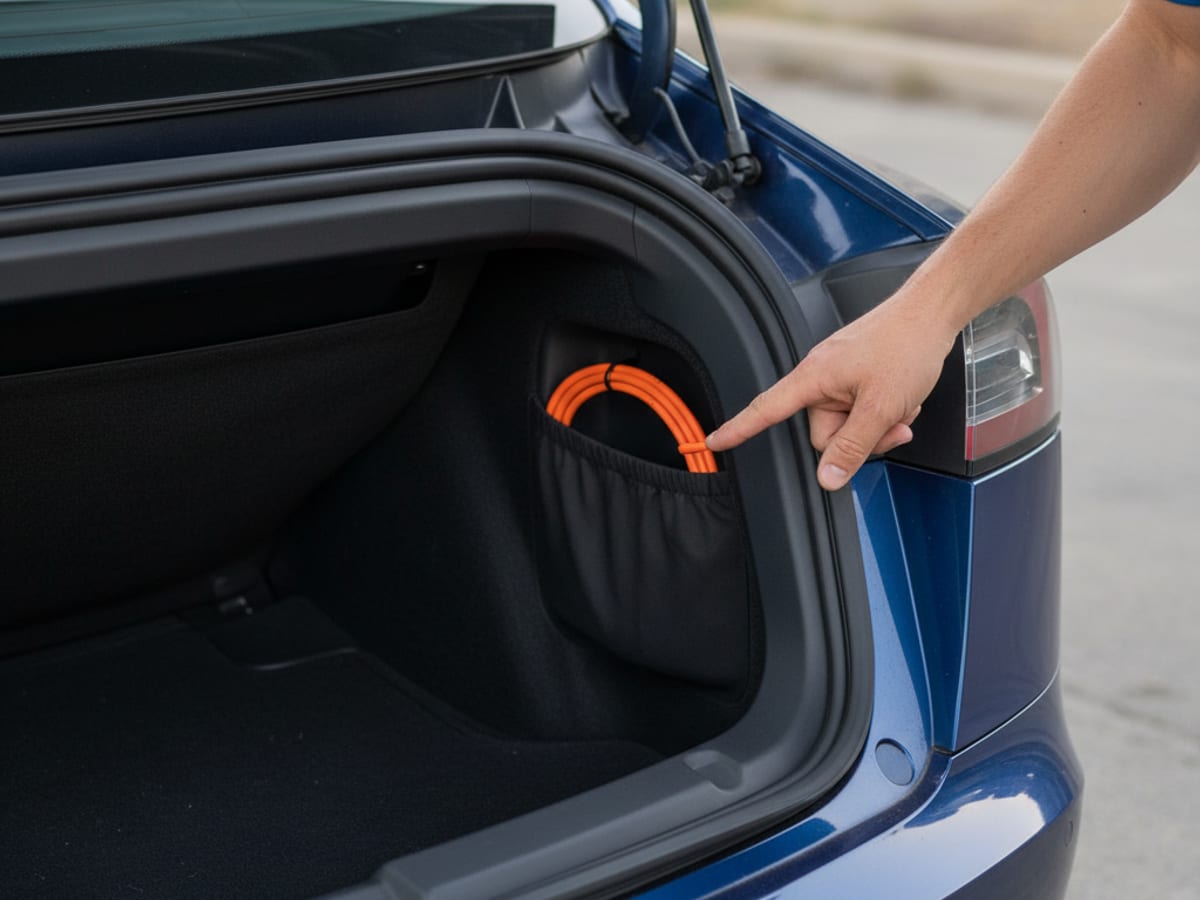
Model S and Model X hide theirs in the rear hatch. On older cars, look on the driver’s side near the taillight. Peel the carpeted panel. Pull the cable toward you. On 2021 and newer refresh S and X, check the passenger-side trunk trim. That layout is closer to the Model 3.
A Chevrolet Bolt puts the cord under the rear cargo floor. It’s near the 12-volt battery. Pull the cord and the connector at the same time. Volkswagen ID.4 owners should lift the cargo cover. The pull loop sits on the passenger side, behind the C-pillar trim.
Under a Rivian rear seat
On a Rivian R1T or R1S, the cord is inside the cabin. Open the rear passenger-side door. Lift the rear seat bottom. There’s a service panel underneath. Pull the release cord firmly. Keep holding it while you work the connector out.
A tab on the Ford port
Ford put the backup on the charge port itself. Open the port door on an F-150 Lightning or Mustang Mach-E. Look near the top or bottom edge of the housing. You’ll see a small triangular tab with an unlock icon. Pull the tab away from the port while you pull the cable. On a Lightning, FordPass can still command a release. That works when the car feels asleep. Frozen cables on the Mach-E have their own walkthrough: Mustang Mach-E charge port stuck.
A sidewall button on Hyundai and Kia
Hyundai Ioniq 5, Kia EV6, and Kia EV9 hide a button in the rear cargo. It’s under a plastic cover on the driver’s-side sidewall. Pull the cover, then press and hold the button while you pull the cable. The Ioniq 5 cable-release steps match what those Kia crossovers use.
When the cable still won’t move
Wake the car first. Open and close the driver’s door. A sleeping EV can look dead, then come back. Try the manual release again.
Rock the connector slightly while you hold the release. A small side-to-side wiggle can clear the locking lip. Don’t lever on the handle or twist hard.
Then try a short reboot. Tesla: hold the brake and both scroll wheels. Most others: hold the start button for about 10 seconds. After the reset, stop charging from the screen if it will let you. Try the handle once more.
If none of that works, stop. Forcing a stuck solenoid can wreck the port. Leave the cable in place. Call for a local operator instead of tearing trim.
If you’re free, and still empty
You can free the plug and still be stranded. A grocery stall in Riverside won’t help if the session never added miles. Neither will a Fontana warehouse row. Same for a shoulder on I-15 toward the Cajon climb. The car is unplugged. The pack is still empty.
Same story on I-10 through Colton and Redlands. It’s the same on I-215 through Moreno Valley and Perris. Mountain miles toward Lake Arrowhead or Big Bear Lake burn range going up. The descent doesn’t refill a pack that never charged. High Desert stretches near Victorville, Hesperia, and Adelanto are long once you’re already low.
That’s when a mobile EV charging visit matters more than another tug. The goal is enough range to reach a working stall, not a full pack.
If the 12V froze the latch, the same operator can jump or replace it. Tesla, Rivian, Ford, Hyundai, Chevy, and the other major brands are all in scope.
Confirm the next stall in the car’s app before you roll. If you’re already on empty, stay with the car. Ask for a mobile charge.
Home power is a different night
If this happened in the driveway, the latch steps are the same. The utility is not. Riverside Public Utilities serves the city of Riverside. Colton Electric owns the grid inside Colton. Banning runs its own electric utility. Bear Valley Electric Service covers Big Bear Lake and Big Bear City. Most other inland cities sit on Southern California Edison. Rancho Cucamonga and Moreno Valley are split, with a municipal pocket in each. None of those rate plans will unlock a public stall tonight.
Who to call from the stall
Charge Pro IE doesn’t own trucks and doesn’t do the work. We take the call and match you with a local independent operator. The operator quotes you before starting and bills you directly.
Call (909) 250-2881 if the manual release didn’t free the cable. Use that line when the car is too dead to reach the trim. Use it if you’re blocking a stall with a low pack. Ask for mobile EV charging if you need range, not just a latch.
Frequently asked questions
Why won’t my Tesla charger come out of the car?
The charge port latch is electric, so it can stall. The solenoid needs a healthy 12-volt feed to let go. A paused session can freeze the latch even when the charger looks idle. Stop charging on the screen, wait for confirmation, then press the handle.
Should I yank the cable if it’s stuck?
No. Yanking or twisting the handle can wreck the port. If a jump and a reboot fail, use the mechanical backup. If it still won’t move, leave the cable in place.
What should I try before I peel any trim?
Stop charging on the screen and wait until the session is actually off. Then press the handle button instead of pulling on the cable. Dim lights and a slow screen often mean the 12-volt battery is weak. Jump that small battery, then try the release again.
Where’s the manual release on a Model 3 or Y?
It’s in the trunk, on the passenger-side inner wall. Peel back the carpeted trim and pop the small access panel. Pull the plastic tab on the cable downward and hold it. Keep that tension while you lift the charge connector out.
What if I free the cable but the car is still empty?
Unplugging doesn’t add miles if the session never finished. Charge Pro IE refers you to an independent local operator. That operator can bring a 240-volt Level 2 source to the car. It typically adds 10 to 20 miles in 15 to 30 minutes of charging.