If your EV dies on SR-60 in Jurupa Valley, get out of the live lanes. Turn the hazards on. Then call for a mobile Level 2 charge. Sitting still with the AC on empties a low pack on this stretch. Valley-floor heat along the Santa Ana River makes that worse. Charge Pro IE is a referral line. We match stranded drivers with independent local mobile rescue operators. The operator brings 240-volt power to the car.
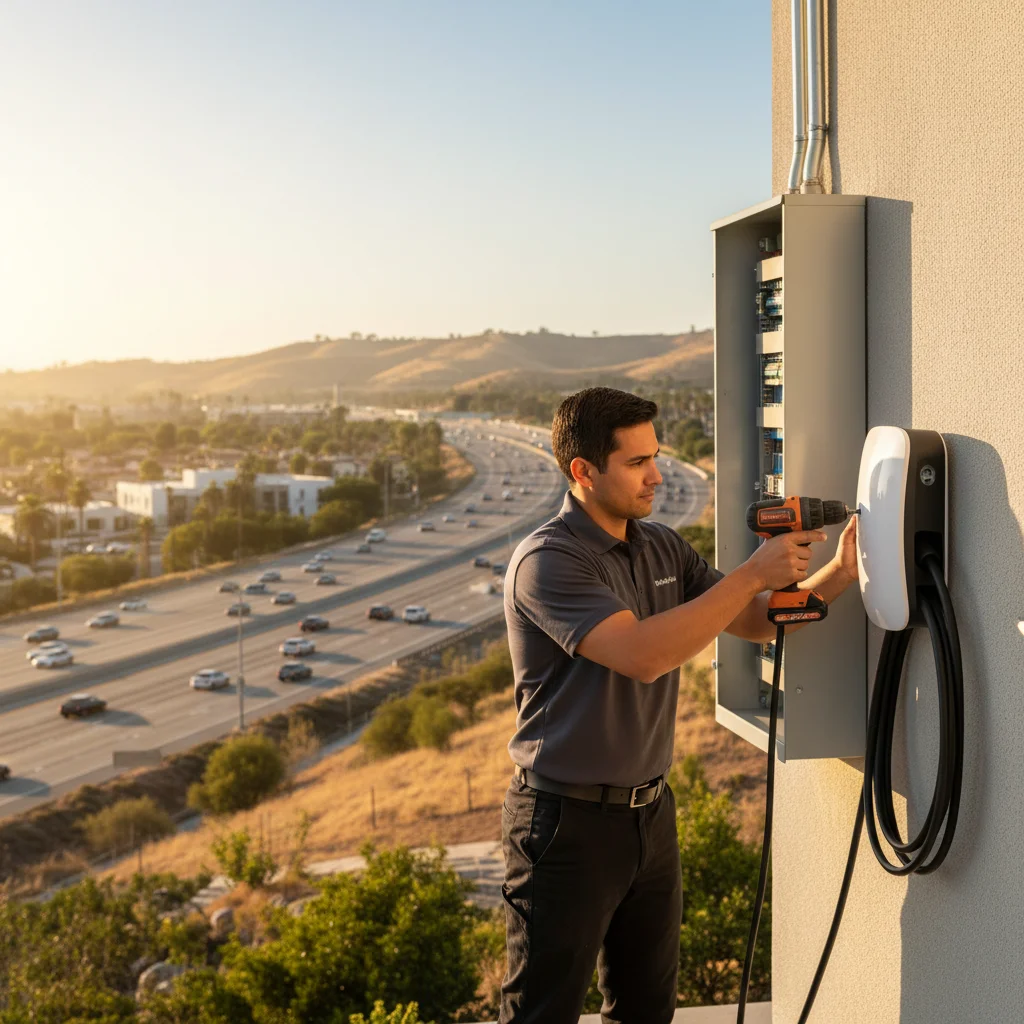
Heat, idling, and a pack that was already thin
Jurupa Valley sits on the Corona corridor. SR-60 is the east-west spine through town. I-15 cuts north to south. The northern end of the 15 Express Lanes meets SR-60 here. That mix means trucks, merges, and a lot of idling. Cabin cooling draws from the same pack you’re trying to stretch. If you’re already in the single digits, waiting with climate control on finishes the job. A Tesla, a Hyundai, and a fleet van all share that math. The traction pack feeds HVAC and the 12-volt system while you sit.
The city covers 42.94 square miles. The Jurupa Mountains rise through the middle. The floor along the Santa Ana River still holds heat after dark. Drivers who left Glen Avon with a thin overnight charge feel it first. 50.5 percent of housing here was built before 1980. That’s the ACS 2019-2023 vintage. Older homes often never got a dedicated EV circuit. People leave in the morning on whatever a wall outlet gave them. By Mission Boulevard or Van Buren, the buffer can already be thin.
Jurupa Valley incorporated in 2011. It’s one of the youngest cities in California. Warehouse miles, river-bottom heat, and SR-60 traffic were already here. Mira Loma and Etiwanda hold one of the densest warehouse belts in the country. Limonite and Etiwanda carry heavy truck traffic all day. Delivery vans idle in queues with the AC running. That’s the same drain as a stall on SR-60, just in a lot. If you’re still rolling and the gauge is falling, don’t wait for zero. Our guide on what to do when an EV is running low covers that choice. Read it while you still have a few miles. Heat and grades have their own page too. See how to care for an EV battery in Inland Empire heat.
Tell them Rubidoux, Mira Loma, or Pedley
Say the old community name when you call. Jurupa Valley used to be a string of unincorporated places. Rubidoux. Mira Loma. Glen Avon. Pedley. Sunnyslope. Belltown. Many long-time residents still use those names. Mail still uses them too. A pin that only says Jurupa Valley covers a lot of ground.
“I’m in Rubidoux, eastbound 60 near Rubidoux Boulevard” is a location an operator can use. Pedley Road sits in a different pocket than the warehouse rows. Indian Hills and Crestmore Heights don’t drive like Etiwanda Avenue. The Limonite Avenue corridor is its own world of trucks and signals. Horse-property streets near the river have unpaved shoulders and long driveways. An operator has to set up where it’s safe. They can’t do that from a city name alone.
ZIP codes that overlap the place include 91752, 92509, and 92860. A ZIP isn’t a city limit. It still helps a person hear where you are. Neighbors are Riverside, Eastvale, Norco, Fontana, Ontario, Bloomington, and Corona. If you drifted over a line, say so. We serve every city in the county. The operator still needs the right off-ramp.
Landmarks help when the last exit is a blur. The Jurupa Valley Spectrum. The Louis Robidoux Nature Center. The Jurupa Mountains Discovery Center. The Santa Ana River corridor. Mount Rubidoux sits nearby, on the Riverside side. You don’t need a mile marker. Name the landmark and your direction of travel. For a city-level walkthrough, start here after you’re off the freeway: who to call when your EV dies in Jurupa Valley.
Pull left if you’re in the 15 Express Lanes
Most California freeway stalls belong on the right shoulder. This interchange is the exception. The northern terminus of the 15 Express Lanes is here, at SR-60. If you’re in those median lanes, you pull left. Don’t cut across live traffic to chase a right shoulder.
Corona drivers already know that left-shoulder fact from the 15 mix. In Jurupa Valley it shows up at the 60. Give the operator your direction. Eastbound or westbound on 60. Northbound or southbound on 15. And whether you’re in the express lanes or the general lanes. A line like “white Model Y, westbound 60, past Van Buren” is enough.
If you still have enough power to roll, pick a wide, straight stretch. Avoid stopping on a curve if you can still creep. Avoid an on-ramp gore point. Avoid the merge from the express lanes. Once the car is dead, you work with the shoulder you have. Hazards stay on the whole time.
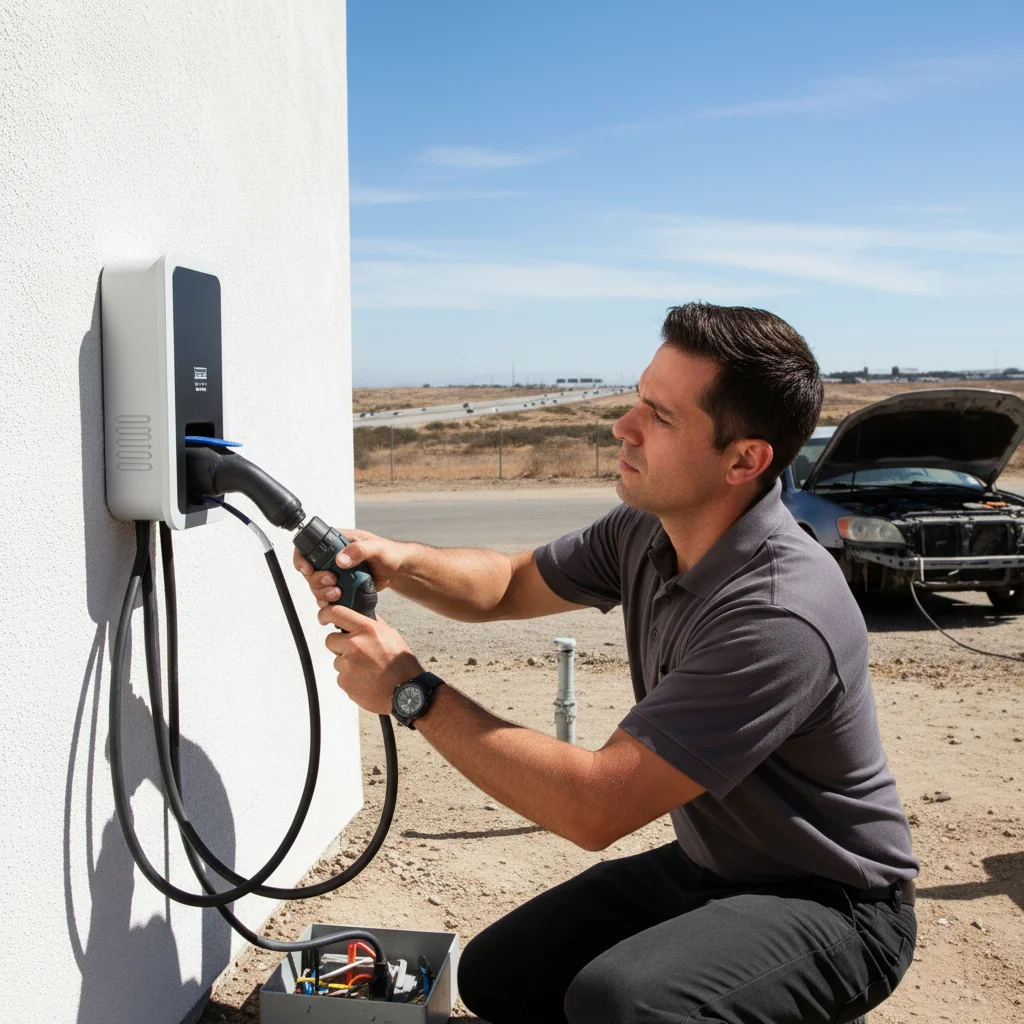
Warehouse lots, Limonite, and a van that won’t wake
Jurupa Valley is the warehouse capital of Riverside County. Fleet EVs strand here as often as family cars. A van that sat with the AC on can be empty before I-15. If that van is in a lot rather than on the freeway, say so. A paved warehouse row is a different setup than a freeway shoulder.
The operator still brings a 240-volt Level 2 source. Native NACS for Teslas. A CCS or J1772 adapter for other EVs. They typically add 10 to 20 miles of range in 15 to 30 minutes. That’s charging time on the plug. It isn’t a promise of when someone arrives.
Rural-residential streets around the Jurupa Mountains are the other pattern. Unpaved shoulders, long driveways, and gates are common. Stay with the car. Don’t send an operator to a locked entrance and a pin in a wash. If you can roll onto a paved apron, do that before the car dies.
Southern California Edison serves Jurupa Valley. That’s the utility at the meter. It doesn’t plug a car on SR-60. A dark house charger in older Glen Avon is a separate problem. Don’t wait in the driveway. That panel won’t help a car already on 60.
Stay out of the lane, then stay with the car
SR-60 through Jurupa Valley is a divided state highway. The California Highway Patrol covers it. The basic shoulder rules still apply.
Get as far from the travel lane as the shoulder allows. Hazards on right away. Don’t wait to see if the car wakes up. If you’re on the right shoulder, leave through the passenger side. The driver door opens into traffic. Stand behind the right rear corner. Don’t stand between the car and the lanes.
If you’re in the express lanes, live traffic is on your right. Keep the car as far left as you can. Exit away from the travel lanes. Stay with the vehicle. Don’t walk the shoulder toward an exit. Truck traffic on this corridor doesn’t leave much margin for a pedestrian.
Call 511 to report a disabled vehicle on a state highway. Give direction, the last exit you passed, and a description of the car. That’s a location report, not a charge. Then call for a mobile operator. If CHP is already on scene, follow their instructions.
Don’t stand in a gore point. Don’t pop the hood and wander. Don’t try to push an EV. If you have triangles or a vest, set them behind the car. If you don’t, hazards and a tight shoulder position still come first.
Cabin AC while you wait is the trap on this corridor. Valley heat makes it feel necessary. Every minute of cooling is pack you may need for lights and locks. Crack a window if it’s safe. Save the compressor until you know the traction pack still has a buffer.
What a mobile Level 2 visit actually is
Charge Pro IE doesn’t own trucks. We don’t employ technicians. We don’t set prices. We don’t publish arrival times. We connect stranded drivers with independent local operators. The pros we connect you with are licensed. The operator quotes you before any work starts. They bill you directly.
What they do on site is straightforward. They roll a 240-volt Level 2 source to the car. Teslas take a native NACS plug. Other EVs take a CCS or J1772 adapter. A typical session adds 10 to 20 miles in 15 to 30 minutes of charging. That’s enough to get off the shoulder and to a place you choose. It isn’t a full pack.
They can also jump or replace a dead 12-volt battery on site. That matters because a lot of “dead EVs” still have range showing. The car just won’t wake. Tesla, Ford, Hyundai, Kia, Rivian, and GM all sit on a 12-volt. Heat can take that small battery down. Volkswagen and the other major brands are the same story.
Read what a mobile EV charging visit actually is for the sequence. The mobile EV charging service page covers the same idea without the SR-60 specifics. If the pack is truly empty, out-of-charge recovery is the matching path. This page doesn’t publish an arrival clock. Traffic on SR-60, Limonite, and the 15 interchange changes by the hour. The operator tells you what they can do when they take the call.
Empty pack or a 12-volt that gave up
Two failures look the same from the driver seat. The screens are dark. The doors may not latch the way you expect. The car won’t roll.
If you had range a few minutes ago, then everything died, think 12-volt first. Heat along the river corridor is hard on that small battery. A jump on site can bring the car back. If it dies again after the jump, the 12-volt is usually due for replacement. Another roadside hop won’t fix a battery that’s at the end.
If the range display was already at zero, that’s a depleted traction pack. Jumping the 12-volt won’t put miles in the pack. You need a charge, or a tow you arrange yourself. A mobile Level 2 visit is the charge option. A tow is a different trade. The operator isn’t a tow company.
Don’t guess in the live lanes. Get to the shoulder, keep hazards on, then describe what you saw. Note the percent remaining, any warning lights, and whether accessories still power on.
Corona, Eastvale, and the rest of this corridor
SR-60 doesn’t stop at the Jurupa Valley line. West and south you’re into Corona, Eastvale, and Norco. East you’re toward Riverside and the river. North of the warehouses you’re looking at Fontana and Ontario miles.
If the stall is on the Corona side, start with EV roadside assistance in Corona. The heat story is related. The exits are not. Stay off the travel lanes while you sort that out.
Frequently asked questions
What should I do first if the EV dies on SR-60 in Jurupa Valley?
Get fully onto the correct shoulder and turn the hazards on. Right shoulder in the general lanes. Left shoulder in the 15 Express Lanes at SR-60. Exit away from traffic. Report the stall on 511. Then call for a mobile operator. Give the old community name, the direction, and the last cross street.
Do operators handle Teslas and other EVs on this corridor?
Yes. The pros we connect you with bring a 240-volt Level 2 source. Native NACS for Teslas. CCS or J1772 adapters for non-Tesla EVs. They can also jump or replace a dead 12-volt battery. Confirm the make when you call so the operator brings the right plug.
Why does waiting with the AC on empty the pack so fast here?
Jurupa Valley sits on a hot valley floor along the Santa Ana River. Cabin cooling draws from the traction pack. On SR-60 you’re often already in traffic, already low, and already using climate control. Minutes of idling with the compressor on can erase the last buffer you had.
If you’re stuck on SR-60 in Rubidoux or Mira Loma, call (909) 250-2881. We’ll connect you with a local operator. They quote before they start, and they bill you directly.