A dark Tesla doesn’t automatically need more driving range. It may need low-voltage power so its controls can respond. The right Tesla jump starter is one approved by the equipment maker for the low-voltage system named in your exact model-year manual.
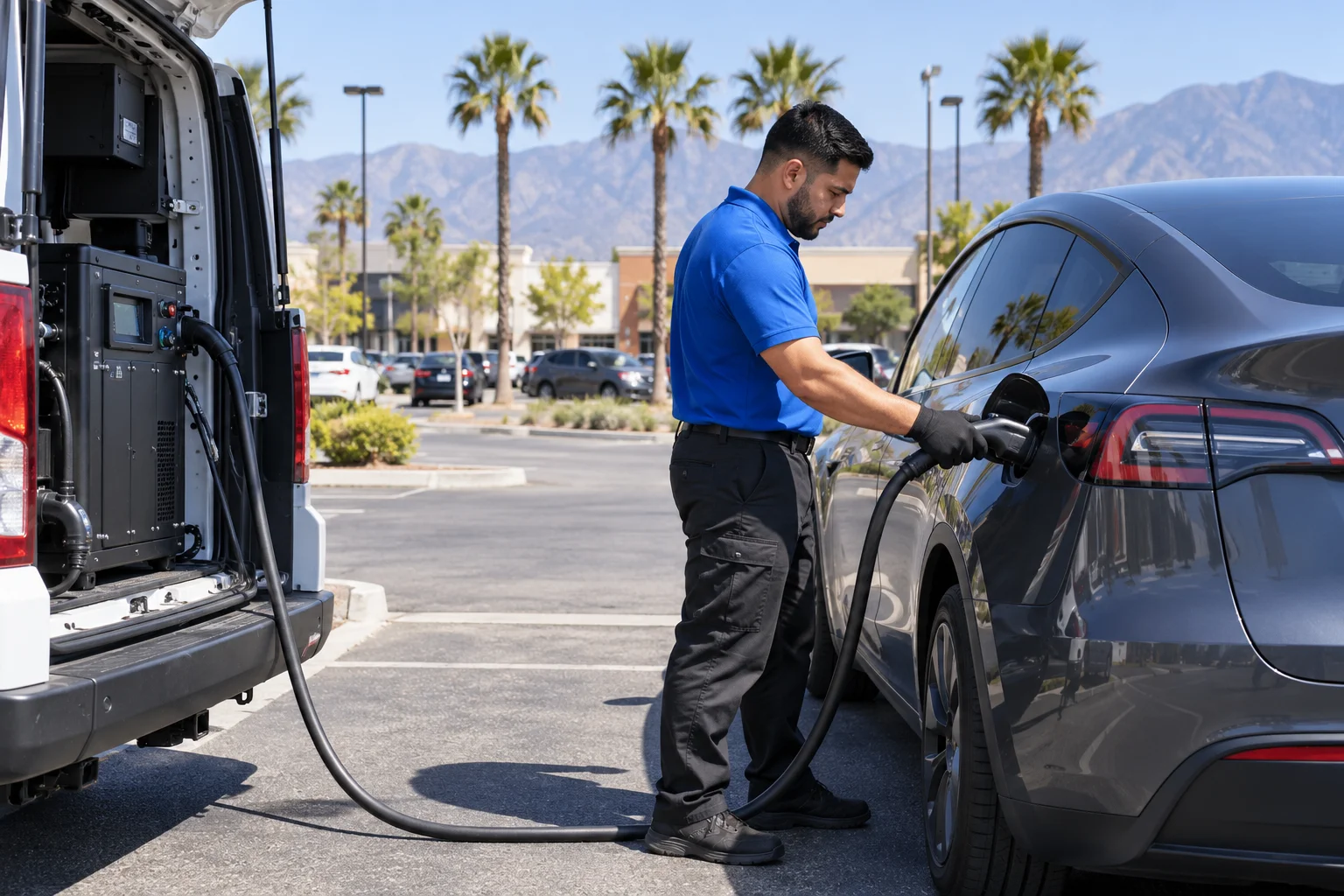
A jump starter wakes the low-voltage system
A jump pack has a narrow role in a Tesla. It supplies power to the low-voltage side when that system can’t operate normally. That can matter when the screen, locks, charge-port door, or other controls don’t respond.
It doesn’t follow that every dark Tesla needs a jump. Tesla’s current Model 3 and Model Y manuals say an unresponsive screen, app, locks, and charge-port door can indicate a low-voltage problem. They don’t present those symptoms as a complete diagnosis.
That distinction should shape your purchase. Don’t choose equipment because its package promises impressive engine-starting performance. Start with your Tesla’s manual. Identify the low-voltage system and the equipment instructions that apply to that exact car.
No universal voltage, amperage, or jump-pack model could be confirmed from the approved source material for every Tesla. Product rankings that treat all Model S, Model 3, Model X, Model Y, and Cybertruck builds alike skip the most important check.
A suitable jump starter must match both sets of instructions:
- The Tesla manual for your exact model and year
- The jump-pack maker’s stated applications and operating limits
If either source leaves the match unclear, don’t connect the pack. Ask the manufacturer or a qualified roadside operator to confirm compatibility.
A jump can also be temporary. It doesn’t prove the low-voltage battery is healthy or that the problem is solved. Our Tesla 12V battery jump service explains when matching with a local operator may be the safer next move.
Why it cannot recharge the traction pack
A Tesla jump starter isn’t a substitute for EV charging. It addresses the low-voltage system, not the traction battery that provides driving energy. Buying a larger jump box doesn’t turn it into a mobile charger.
This difference matters in Inland Empire parking lots and freeway corridors. A Tesla can be dark because its low-voltage controls aren’t responding. It can also be stranded because the traction pack lacks enough charge to continue. Those situations need different equipment.
Look for the car’s behavior before selecting a service. A fully unresponsive screen, app, locks, and charge-port door can point toward low-voltage trouble. A responsive car that reports insufficient driving energy points toward a charging or recovery problem. Neither observation replaces diagnosis.
If you’re unsure, use our guide to tell a dead Tesla traction pack from a low-voltage problem. It focuses on choosing the correct kind of help before anyone connects equipment.
An out-of-charge Tesla may need mobile EV charging or a properly arranged tow. A low-voltage jump pack won’t add usable driving range. Likewise, charging equipment isn’t the first answer when the car’s low-voltage controls can’t open or respond.
The broader EV system can make the distinction easy to miss. The U.S. Department of Energy’s EV overview explains the traction-battery role in electric driving. Your Tesla manual remains the authority for the low-voltage system and access procedure in your car.
What changes between Tesla low-voltage systems
“Tesla 12V” is a common search phrase, but it isn’t a complete equipment specification. Tesla low-voltage systems and access points vary by model, build, and system. That’s why a product recommendation without the vehicle details can mislead you.
Current Model 3 and Model Y manuals distinguish two sets of external connections. The low-voltage terminals behind the tow-eye opening release the hood latches. Tesla says those terminals don’t charge the low-voltage battery. The actual jump points are under the hood, and their locations vary.
That detail prevents a common buying mistake. A compact power source that can release the hood isn’t automatically confirmed for the next task. Frunk access and low-voltage support are separate steps with separate connection points.
Before buying or using a jump starter, record:
- Your Tesla model
- The model year
- Any build or low-voltage details shown in its documentation
- The manual page for opening the hood without normal power
- The manual page identifying the correct jump points
- The jump-pack maker’s compatibility instructions
Don’t infer compatibility from a photo, forum post, or another Tesla in the household. Similar-looking cars may have different instructions. Use the manual connected to your vehicle, then compare it with the current jump-pack documentation.
The same caution applies when asking whether a Tesla can jump-start a gas car. No universal approval for that use appears in the approved source material. Check the Tesla manual and the other vehicle’s manual before connecting anything. Our separate guide explains why you shouldn’t assume a Tesla can jump-start another car.
For connection steps, use the dedicated Tesla jump-start guide. This page stays focused on selecting equipment.
Checks to make before connecting any equipment
First, confirm that you’re dealing with the low-voltage system. Don’t connect a jump pack simply because the car looks dead. Check whether the touchscreen, app, locks, lights, and charge-port door respond.
If the charge-port door won’t open, don’t force it. Current Tesla Model 3 and Model Y manuals list normal opening methods through supported controls. A door that remains unresponsive can be one clue among several, not proof of one failed component.
Next, open the owner’s manual for the exact vehicle. Find the low-voltage jump section and the hood-release section. Confirm that you understand which terminals only release the hood and which points support the low-voltage system.
Then compare the manual with the jump-pack documentation. The product maker should clearly state the supported system, connection method, operating limits, and warning conditions. If you can’t confirm those details, the equipment match remains unverified.
Inspect the equipment before use. Follow its instructions for condition, charge state, storage, clamps, cables, and warning indicators. Don’t improvise with damaged parts or substitute a connection point because it’s easier to reach.
Location also changes the decision. A Tesla sitting in a Riverside driveway gives you room to stop and verify documentation. A disabled vehicle beside I-10, I-15, I-215, SR-60, or SR-91 introduces moving traffic.
California law requires flashing warning lights when an equipped vehicle is disabled on the roadway. If you’re exposed to traffic, prioritize personal safety and summoned assistance. Don’t stand near a traffic lane while comparing jump-pack instructions.
Charge Pro IE doesn’t diagnose vehicles or perform jumps. We connect drivers with licensed, independent local operators. The operator evaluates the vehicle and uses equipment selected for that job.
When the wrong tool can cause more trouble
The wrong jump starter can turn an uncertain diagnosis into a riskier situation. That includes equipment whose output you haven’t matched to the car, damaged leads, unclear instructions, or a pack chosen only for a large marketing number.
Connecting to the wrong terminals is another concern. On current Model 3 and Model Y instructions, the tow-eye opening terminals serve the hood latches. They aren’t the under-hood jump points. Treating those locations as interchangeable ignores Tesla’s published distinction.
Stop when the manual and the product instructions don’t agree. Don’t solve the conflict by following a video for another model year. Don’t guess based on wire color, connector shape, or a product listing that says it works with electric vehicles generally.
A jump starter also isn’t a repair. If the Tesla wakes and then loses low-voltage power again, repeated jumping may hide an unresolved fault. The car needs proper evaluation rather than a cycle of temporary restarts.
Heat and travel conditions make preparation especially useful here. Riverside Municipal Airport averages 21.7 days each year at or above 100 degrees. Victorville averages 42.2 such days. Follow the jump-pack maker’s storage limits instead of leaving equipment wherever it fits.
Cold mountain trips present a different setting. Big Bear Lake’s centroid sits at 6,832 feet, while Wrightwood’s sits at 6,736 feet. Before traveling, confirm that the selected equipment’s published operating limits fit the conditions you expect.
Avoid unsupported promises about spark protection, certifications, warranties, or universal Tesla compatibility. Those features must come from current manufacturer documentation. If you can’t verify them, don’t treat them as purchase facts.
When to match a local roadside operator
Call for roadside help when the system type remains unclear, the access steps don’t match your car, or you can’t verify the jump pack. Help also makes sense when the Tesla is beside traffic or repeatedly loses low-voltage power.
Charge Pro IE is a referral service. We connect Inland Empire drivers with licensed, independent local operators. The customer contracts with and pays the operator directly. Charge Pro IE doesn’t own rescue equipment, perform jumps, set the operator’s price, or promise an arrival time.
Tell the referral line what you can observe. Mention the Tesla model and year, whether the screen responds, whether the doors unlock, and whether the charge-port door opens. Also explain whether the car reports an empty traction pack or appears completely dark.
Those details help separate a possible low-voltage problem from an out-of-charge vehicle. They also help identify whether the situation calls for a jump, mobile charging, or recovery equipment. The matched operator makes the on-site assessment.
Our Tesla roadside rescue service covers the broader matching process. It’s useful when the cause isn’t clear enough to request one specific service.
Local context matters. California Energy Commission data for 2025 shows Teslas made up 61.7% of battery-electric cars in Riverside County and 66.4% in San Bernardino County. That makes Tesla-specific roadside equipment especially relevant across the Inland Empire.
Don’t buy a random pack just to avoid asking for help. A confirmed equipment match is more useful than a larger specification or a longer feature list. If the manual, product maker, or operator can’t confirm the match, leave the equipment disconnected.
When to call us
Call when your Tesla is dark, the correct low-voltage equipment is unclear, or the situation needs a mobile EV rescue operator. Call us at (909) 250-2881 and we’ll connect you with a local EV rescue operator.